
Life Science Companies play a crucial role in shaping the future of healthcare and pharmaceuticals. These companies are at the intersection of science, technology, and business. Dr. Emily Carter, a leading expert in the field, once said, "The success of Life Science Companies hinges on their ability to innovate and adapt." Her insights remind us that the procurement processes in this industry must be both strategic and agile.
In recent years, the demand for innovative solutions in healthcare has surged. This pressure affects how Life Science Companies approach procurement. These companies need to streamline their supply chains while ensuring compliance with regulations. Additionally, they face the challenge of balancing cost with quality. The procurement decisions made today will impact research and development tomorrow.
As the landscape evolves, Life Science Companies must reflect on their procurement strategies. It is not simply about acquiring goods. It is about fostering partnerships that drive innovation. Failure to adapt could lead to missed opportunities. In an industry that thrives on science and discovery, the procurement function is more vital than ever.

Life science companies play a crucial role in advancing health and medicine. These organizations include pharmaceuticals, biotechnology, and medical devices sectors. They develop products that enhance our quality of life. Their research drives innovation, enabling new therapies and treatments. This sector relies heavily on specialized knowledge and cutting-edge technology.
Employees in life science companies often come from diverse backgrounds. Researchers, biologists, chemists, and engineers collaborate to push boundaries. They work in labs, where precision is essential. Mistakes can have serious consequences. This high-stakes environment fosters a culture of continuous learning and adaptation. Teams must communicate effectively to ensure safety and compliance.
The impact of life science companies extends beyond their products. Their procurement strategies shape supply chains and influence resource allocation. Efficiency in procurement can accelerate product development. However, challenges exist in sourcing quality materials. Balancing cost with quality requires careful planning. Life science firms must also navigate regulatory pressures, which can complicate their procurement processes.
| Dimension | Data Type | Impact on Procurement |
|---|---|---|
| Research & Development | Innovation Rates | High demand for raw materials and lab supplies |
| Manufacturing | Production Volumes | Bulk purchasing strategies |
| Regulatory Compliance | Compliance Rates | Increased costs for compliant materials |
| Market Dynamics | Market Growth Rates | Changing supplier relationships |
| Sustainability | Sustainable Material Usage | Pressure for eco-friendly procurement |
Life science companies play a crucial role in the healthcare sector. They conduct research and develop innovative solutions that enhance patient care and health outcomes. These organizations focus on areas such as biotechnology, pharmaceuticals, and medical devices. Their products are often pivotal in treating diseases and improving overall health.
A significant aspect of these companies is their relationship with procurement. Effective procurement ensures that healthcare providers have access to necessary tools and therapies. Life science companies must navigate complex regulations while meeting the needs of healthcare facilities. This can be challenging. Sometimes, delays in product development occur due to stringent quality checks. Such situations can lead to shortages in critical supplies.
Collaboration between life science companies and healthcare providers is essential. It fosters transparency and trust. However, communication gaps can arise. This may lead to misalignment of expectations. Both parties need to work together to overcome these challenges. Engaging in open discussions can enhance the procurement process. Ultimately, better collaboration leads to improved patient outcomes.
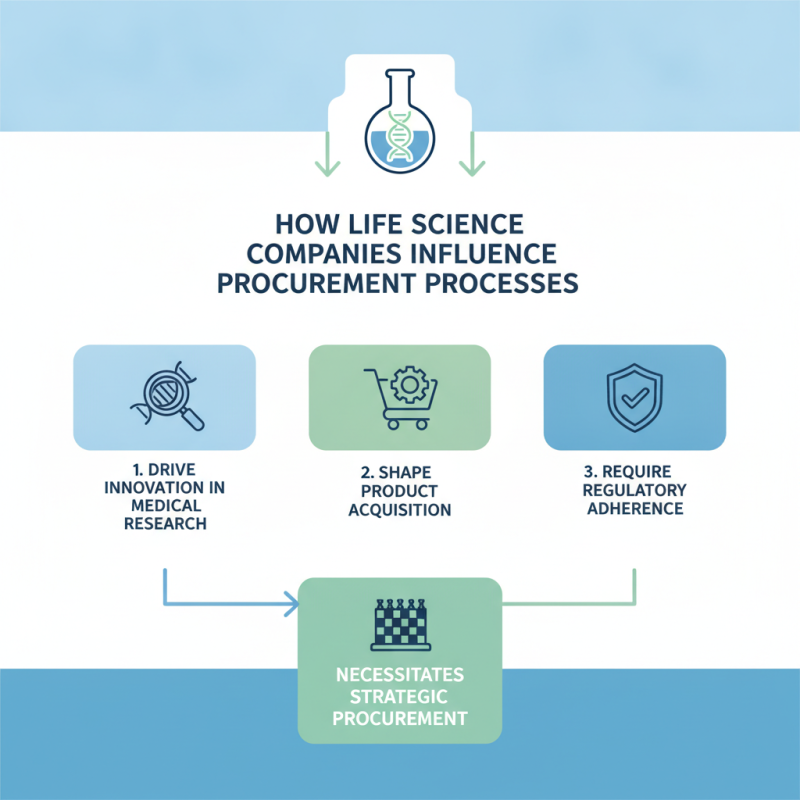
Life science companies play a crucial role in shaping procurement processes. They not only drive innovations in medical research but also influence the way products are acquired. These organizations often require specific materials and services that adhere to strict regulatory standards. This complexity necessitates a more strategic approach to procurement.
The impact of life science companies on procurement is profound. They push for transparency and quality, ensuring that suppliers meet rigorous industry standards. This means procurement teams must frequently assess suppliers’ capabilities and compliance levels. It can be a challenge, as not all suppliers are prepared for such scrutiny. Additionally, market fluctuations can lead to sudden changes in demand, complicating procurement decisions.
Procurement teams must stay agile. Understanding the latest trends in life sciences is essential. This requires continuous learning and adaptation. Collaborations between departments are vital to forecast needs accurately and respond effectively. Life science companies, with their unique pressures and challenges, force procurement teams to evolve. It’s an ongoing process of reflection and improvement.
Procurement in life science industries faces unique challenges. Regulatory requirements are complex and ever-changing. Companies must ensure compliance with local and international laws. This adds layers of complexity to sourcing materials and services. Delays in procurement can lead to costly disruptions.
A key challenge is the need for rigorous supplier evaluation. Life science companies require high-quality standards. Finding suppliers who can meet these standards is not easy. A lack of qualified suppliers can impact timelines and budgets. Procurement teams must invest time and resources in building strong relationships.
Tip: Regularly assess your supplier base. This helps to ensure they meet your evolving needs. Open communication with suppliers improves collaboration and efficiency.
Another challenge is managing risks. Disruptions in the supply chain can arise from natural disasters, geopolitical tensions, or economic instability. Companies must prepare for these uncertainties. Diversifying suppliers can mitigate some of these risks. However, it requires careful planning.
Tip: Establish contingency plans for critical supplies. Being proactive can save time and money in emergencies. This also strengthens your overall procurement strategy.
The landscape of life science procurement is rapidly evolving. Companies are increasingly seeking innovative solutions to enhance efficiency. This shift is driven by advancements in technology and the need for sustainability. Data analytics allows for better demand forecasting, which reduces waste. Moreover, automation streamlines processes, freeing up human resources for strategic tasks.
Supply chain management is also witnessing significant changes. Companies are emphasizing collaboration with suppliers. This collaboration fosters resilience and adaptability. Real-time tracking systems enable better visibility across the supply chain. Yet, challenges remain. Balancing cost and quality is a constant struggle. Companies must also navigate complex regulatory environments. These factors can complicate decision-making and hinder agility.
As life science companies look to the future, the focus will be on agility and responsiveness. Adopting new technologies is essential, but not without risks. The integration of AI could predict market shifts. However, over-reliance on technology might overlook vital human insights. Cultivating a diverse supplier base remains crucial. Building relationships with various partners can lead to innovation. Companies must reflect on their practices to ensure continued growth in this dynamic field.
Please fill in as much details as possible and we will take care of your request as soon as possible