
Choosing the right biotechnology training program is crucial for career advancement. This field is rapidly growing. Specialized training can significantly enhance your skills and job prospects. With numerous options available, selecting the right program can feel overwhelming.
Consider the program's curriculum. A strong focus on hands-on experience is essential. The instructors' expertise also matters. Look for programs led by professionals with real-world experience. Their insights can bridge the gap between theory and practice. Additionally, check the program’s reputation within the industry. Alumni success can offer valuable clues about its effectiveness.
Reflect on your career goals. Not every program will align with your aspirations. Are you more interested in research or application? Some programs cater to specific interests. Identify these to make a more informed choice. In the end, the right biotechnology training should not just enhance your resume, but also inspire your passion for the field.

Identifying your career goals in biotechnology is crucial for making informed decisions. Start by reflecting on your passions. Are you intrigued by genetic engineering, pharmaceuticals, or environmental biotechnology? Consider what excites you most. This reflection is fundamental to your journey.
Next, assess your strengths. Do you excel in research, data analysis, or laboratory skills? Aligning your strengths with your interests will guide your program choice. Take time to list your skills and interests. This exercise may reveal unexpected pathways. Don’t shy away from considering roles that seem challenging.
Networking with professionals is vital. Engaging in conversations can provide insights into various careers. Attend biotechnology seminars and workshops. Ask questions about their journeys. This exploration can clarify your path. Embrace the uncertainty along the way; it may lead to unexpected opportunities. It's a process, and your goals may evolve. Stay open-minded as you navigate this complex field.
When researching biotechnology training programs, focus on accreditation and curriculum. A reputable program should have clear accreditation from recognized authorities, ensuring it meets industry standards. Approximately 70% of employers look for candidates with accredited training. A program that covers core topics, including molecular biology and bioinformatics, will provide a solid foundation.
Consider the faculty's expertise in their respective fields. Programs led by experienced professionals can offer insights rooted in real-world applications. Data from industry reports show that mentorship from knowledgeable instructors enhances students' readiness for the workforce. Explore the program's partnerships with biotech firms. Relationships with industry leaders can lead to internships, giving you practical experience.
Evaluate feedback from alumni. A program's effectiveness is often reflected in graduate success rates. Studies indicate that graduates from well-reviewed programs find jobs in biotech roles at significantly higher rates. A balance of theoretical knowledge and hands-on training is essential. Remember, not all programs will meet these benchmarks. Take time to assess your options, ensuring the program aligns with your career goals.
| Program Name | Duration | Format | Cost | Certification Offered | Location |
|---|---|---|---|---|---|
| Biotechnology Fundamentals | 6 weeks | Online | $800 | Yes | Remote |
| Advanced Genetic Engineering | 3 months | In-person | $2,500 | Yes | San Francisco, CA |
| Biotech Regulatory Affairs | 4 weeks | Online | $600 | No | Remote |
| Bioinformatics Training | 8 weeks | Hybrid | $1,200 | Yes | New York, NY |
| Cell Culture Techniques | 2 months | In-person | $1,800 | Yes | Chicago, IL |
When evaluating biotechnology training programs, accreditation and reputation play crucial roles. Accredited programs ensure that the curriculum meets industry standards. This quality can directly impact your employment prospects. Programs with strong reputations often have connections with leading companies. This could lead to internships and job placements after graduation.
Consider the faculty's expertise as an important factor. Professors with notable backgrounds can enhance your learning experience. Their real-world insights add value that textbooks often miss. Look into alumni achievements as well. Graduates' success stories can indicate a program's effectiveness and relevance.
However, it’s essential to be cautious. Not all well-regarded programs fulfill their promises. Some may oversell their outcomes. Speak with current students and alumni to gather authentic feedback. Assessing online reviews can also provide insight, but they may lack objectivity. The best choice combines accreditation with a proven track record of student success.
Choosing the right biotechnology training program involves understanding available curricula and specialization options. Many programs offer a mix of foundational courses and advanced topics. For instance, a survey by the Biotechnology Innovation Organization highlights that over 70% of biotech employers seek candidates with specialized skills. This highlights the importance of selecting programs that align with industry demands.
Specializations can significantly influence career prospects. Training programs may focus on areas like bioinformatics, genetic engineering, or regulatory affairs. According to the Global Biotechnology Report, the demand for bioinformatics specialists is projected to grow by 25% in the next five years. This reflects the need for professionals adept in data analysis and computational biology. It’s crucial to examine the curriculum closely to ensure it meets these evolving trends.
Consider practical experience as a key factor. Programs should offer lab work or internships. Direct exposure to real-world scenarios enhances theoretical knowledge. However, not all programs provide enough hands-on training. An industry analysis indicated that 60% of graduates feel unprepared for technical roles. This gap signals the need for careful evaluation of potential training programs. Each candidate must assess their career goals and align them with the right training opportunities.
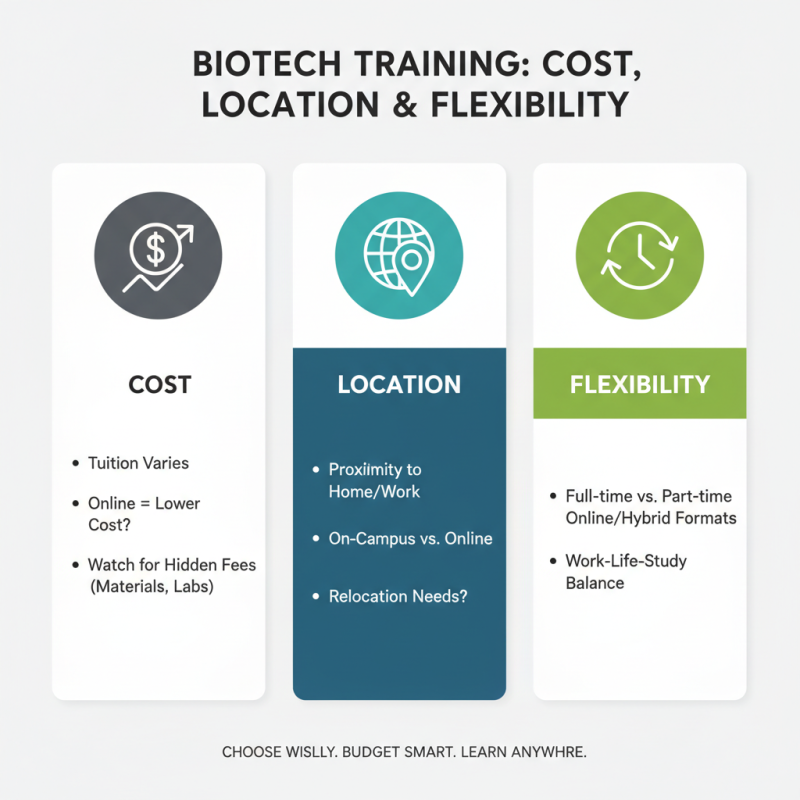
Choosing a biotechnology training program involves careful consideration of cost, location, and flexibility. Training can be a significant financial investment. Tuition fees vary widely between programs. Online options may offer lower costs. However, always check the hidden fees, like materials or lab access. Budgeting ahead of time helps avoid surprises later.
Location can greatly impact your learning experience. If you prefer hands-on training, being near a reputable lab is essential. Some programs might require relocation, which adds living expenses. For those balancing work and studies, online programs might offer the flexibility you need. Yet, be cautious. Online training can sometimes lack the engagement found in traditional settings.
Flexibility is essential but can be a double-edged sword. Part-time options allow you to work while studying. This is helpful, but it requires strong time management. Without it, you risk falling behind. Assess your learning style. Do you need structure? Or are you self-motivated? Reflect on what works best for you as you navigate your choices.
Please fill in as much details as possible and we will take care of your request as soon as possible