Why Nature Biotechnology Matters for Global Buyers?

Why Nature Biotechnology Matters for Global Buyers

Nature Biotechnology is reshaping how global buyers evaluate health, agriculture, and industrial solutions. Its influence reaches beyond laboratories. It affects procurement decisions, investment plans, manufacturing partnerships, and public trust.

A buyer may examine a cell therapy platform in Boston, a fermentation facility in Singapore, and clinical data from Europe. Each detail matters. Scientific promise alone cannot support a responsible purchase. Buyers need evidence of reproducibility, manufacturing quality, data integrity, and regulatory readiness. They must also examine cold-chain requirements, supplier capacity, intellectual property, and long-term service commitments.

Jennifer Doudna, Nobel Prize-winning biochemist and CRISPR pioneer, has said, “We need to proceed with caution.” Her warning remains important for every Nature Biotechnology decision. Fast innovation can create pressure to approve products before the evidence is complete. That pressure can produce expensive mistakes. Sometimes, the most impressive presentation hides unresolved questions.

Global buyers therefore need more than technical enthusiasm. They need experienced review teams, transparent documentation, and independent scientific advice. They should ask who generated the data, how often results were repeated, and whether manufacturing conditions match commercial expectations. They should also consider patient safety, environmental impact, and fair access.

No buyer gets every decision right. Some evidence will remain incomplete. That is why disciplined uncertainty matters. Nature Biotechnology helps buyers understand emerging science, but careful verification must guide the final choice. Reliable purchasing begins when innovation meets accountability.
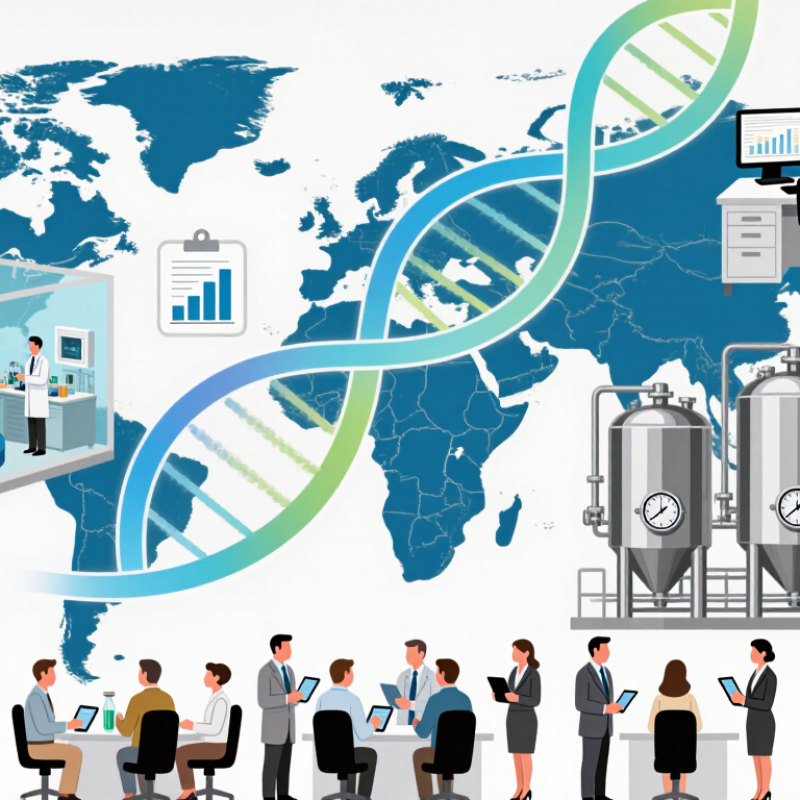
Why Nature Biotechnology Matters for Global Buyers?

What Nature Biotechnology Means for Global Buyers

For global buyers, nature biotechnology means using biological systems to create safer, more efficient, and more sustainable products. It can involve enzymes, microbial processes, plant-based materials, and biological testing methods. The value is practical. Buyers may reduce waste, shorten production cycles, or improve product consistency.

Evidence matters more than attractive claims. During procurement reviews, experienced teams examine test methods, production records, quality controls, and supply continuity. They also check whether a supplier can explain its process in clear technical language. A small laboratory result may not predict factory performance. That gap deserves attention. Buyers should request independent validation, defined specifications, and documented change-control procedures. Regulatory expectations also differ across countries, so local compliance checks remain essential.

Cost is only one part of the decision. A biological input may appear expensive, yet reduce energy use or maintenance over time. However, those savings are not automatic. Buyers need realistic performance data, delivery timelines, storage conditions, and contingency plans. Human judgment still matters. No framework is perfect. Even careful teams can overlook seasonal variation, transport risks, or weak supplier communication. Strong buyers stay curious, question unclear evidence, and record both successes and failures. Nature biotechnology becomes meaningful when scientific promise survives practical testing.

Why Nature Biotechnology Matters for Global Buyers? - What Nature Biotechnology Means for Global Buyers

Buyer Dimension Verified Global Indicator What Nature Biotechnology Includes Why It Matters to Global Buyers Reference
Biodiversity and supply continuity Around 1 million animal and plant species are threatened with extinction, many within decades, if current pressures continue. Products and processes using microorganisms, plants, algae, enzymes, fungi, or biological genetic resources. Buyers need biodiversity-risk screening, traceable sourcing, sustainable harvesting controls, and alternative biological feedstocks. IPBES, 2019
Food and agricultural resilience Approximately 13.2% of food is lost globally between harvest and retail, according to the latest FAO reporting framework. Microbial fermentation, biological crop inputs, enzyme technologies, improved seeds, and post-harvest biological preservation. These solutions can support shelf-life improvement, yield stability, lower input intensity, and more reliable agricultural procurement. FAO, Food Loss Data
Food waste reduction The world generated about 1.05 billion tonnes of food waste in 2022, equal to roughly one-fifth of food available to consumers. Natural preservatives, enzyme-based processing, microbial cultures, edible coatings, and biological packaging materials. Buyers can evaluate solutions by measured shelf-life extension, waste avoided, cold-chain requirements, and total lifecycle impact. UNEP, 2024
Health and responsible sourcing Traditional medicine is used by billions of people, while natural biological resources remain important inputs for pharmaceutical research and health products. Natural-product discovery, biologically produced active ingredients, fermentation-derived compounds, and plant-based health ingredients. Global buyers should require identity testing, contaminant controls, consistent active-content specifications, and legal benefit-sharing practices. WHO, Traditional Medicine
Antimicrobial resistance Bacterial antimicrobial resistance was directly responsible for an estimated 1.27 million deaths globally in 2019. New antimicrobial discovery, phage-based approaches, diagnostic biotechnology, alternatives to antibiotics, and biological wastewater treatment. Purchasing decisions should consider verified efficacy, resistance-management plans, biosafety, regulatory status, and responsible-use requirements. The Lancet, 2022
Climate and resource efficiency The chemical industry is a major industrial energy user and a significant source of greenhouse-gas emissions, creating pressure for lower-impact production routes. Biocatalysis, industrial fermentation, bio-based chemicals, biological carbon conversion, and low-temperature manufacturing processes. Buyers should compare energy, water, land, feedstock, emissions, and end-of-life data rather than relying only on “bio-based” claims. IEA, Chemicals
Regulatory and import readiness Biological products may be subject to different rules covering biosafety, food safety, novel foods, genetic resources, labeling, transport, and environmental release. Genetic-resource-based products, engineered microorganisms, biological pesticides, cultured ingredients, and fermentation-derived materials. A global buyer should confirm country-specific approvals, customs documentation, certificates of analysis, traceability, and permitted claims before contracting. Cartagena Protocol
Supplier evaluation and proof There is no single universal definition or measurement standard for the bioeconomy, so product claims are not automatically comparable. Biological production platforms, nature-derived ingredients, circular bio-based materials, and ecosystem-supporting technologies. Procurement teams should request lifecycle assessments, mass-balance evidence, independent testing, chain-of-custody records, and performance benchmarks. OECD, Bioeconomy

Note: Indicators are global reference points. Product approval, technical performance, environmental impact, and import requirements should be verified for the specific material, application, and destination market.
How Nature-Based Biotechnologies Are Developed and Evaluated

Why Nature Biotechnology Matters for Global Buyers?

How Nature-Based Biotechnologies Are Developed and Evaluated

Nature-based biotechnology begins with a biological question, not a sales brochure. Developers may study microbes, enzymes, plants, or naturally occurring processes. They screen thousands of candidates under controlled conditions, then test performance in soil, water, farms, or factories. Each setting changes the result. Temperature, nutrient levels, and local ecology matter.

Evaluation must cover more than yield. Researchers measure safety, persistence, biodiversity effects, energy use, and lifecycle emissions. The United Nations Environment Programme reported that nature-based solutions received about 200 billion US dollars in global investment in 2022. However, annual investment may need to reach 542 billion dollars by 2030. That gap makes credible measurement essential for buyers. Evidence should include replicated trials, transparent methods, and data from relevant climates.

The International Organization for Standardization has developed lifecycle assessment standards that support consistent environmental comparisons. Yet no standard removes uncertainty. Field results can vary sharply between seasons. Laboratory success is not proof of commercial reliability. Buyers should request independent validation, chain-of-custody records, and clear limits on performance claims. They should also ask what happens after application. Does the material remain active, degrade safely, or affect nearby organisms?

This work is slower than expected.
That is not failure.

It is a signal to improve testing. Strong evaluation combines scientific expertise with local experience. It also accepts negative results. For global buyers, trustworthy nature-based biotechnology means measurable benefits, disclosed risks, and evidence that survives scrutiny beyond a controlled laboratory.

Key Benefits for Agriculture, Healthcare, and Industrial Supply Chains

Why Nature Biotechnology Matters for Global Buyers?

Nature biotechnology is changing how global buyers assess agriculture, healthcare, and industrial supply chains. In agriculture, biological inputs can support healthier soil, reduce waste, and improve crop resilience. A greenhouse manager may notice stronger roots after one growing season, but results can vary by climate and soil type. Buyers need field data, not attractive promises.

In healthcare, biotechnology can improve diagnostic accuracy, vaccine development, and treatment consistency. Reliable suppliers should provide clear validation records, batch controls, and traceable storage conditions. Small temperature changes during transport can affect sensitive materials. Industrial buyers also benefit from engineered enzymes, bio-based materials, and cleaner production methods. These options may lower resource use, although cost and scale remain difficult barriers. No platform removes every risk.

Tips: Request independent test results, production-site information, and documented quality procedures. Compare performance across regions before signing long contracts. Check how suppliers manage transport, recalls, worker safety, and changing regulations. A pilot order can reveal problems that spreadsheets miss. Buyers should also question unclear sustainability claims. “Biodegradable” may not mean rapid breakdown in local conditions. Some procurement decisions will still be imperfect. Careful review simply makes the weaknesses visible earlier.

Why Nature Biotechnology Matters for Global Buyers

Selected global benchmarks show the scale of challenges that biotechnology can help buyers address across agriculture, healthcare, and industrial supply chains.

Agriculture

Reducing the 13.2% of food lost globally between post-harvest and retail can improve supply reliability and resource efficiency.

Healthcare

Immunization prevents approximately 3.5–5 million deaths every year, highlighting the value of scalable biological manufacturing.

Industrial supply chains

Industry produces about 25% of global direct carbon dioxide emissions, increasing demand for lower-carbon bioprocesses and materials.

Sources: FAO, Food Loss Index 2023; WHO, Immunization coverage fact sheet; IEA, Industry emissions data. Values use different units and are presented as contextual benchmarks, not as a direct ranking.

Risks, Regulations, and Standards Shaping Buyer Decisions

Global buyers now inspect more than a product specification. Biological materials can lose value after one uncontrolled temperature excursion. That risk is operational, not theoretical. The World Health Organization estimates that one in ten medical products in low- and middle-income countries is substandard or falsified. Buyers should therefore review supplier qualification, batch records, stability data, and independent testing before signing contracts. A low purchase price can hide expensive recalls, rejected shipments, or damaged patient trust.

Standards provide structure, but they do not remove uncertainty. The 2023 ISO Survey recorded 1,265,216 ISO 9001 certificates worldwide. That scale is reassuring, but incomplete. ISO 9001 can demonstrate quality management, yet it does not prove biological consistency or regulatory approval. Procurement teams should connect certification evidence with validated processes, traceability, cold-chain monitoring, and deviation records. Small documentation gaps often deserve more attention than polished presentations.

Regulatory variation adds another layer. One jurisdiction may require extensive technical files, while another demands local testing or additional labeling. Guidance from the International Council for Harmonisation and national regulators helps buyers compare expectations, but interpretation still differs. Contracts need clear responsibility for inspections, data integrity, change notifications, and transport failures. Perfection is unrealistic. Audits can miss weak handoffs between laboratories, warehouses, and distributors. That uncomfortable gap should remain visible during every buying decision.

How Global Buyers Can Assess Nature Biotechnology Solutions

Global buyers assessing nature biotechnology solutions should begin with the evidence, not the promise. Ask for laboratory methods, field-trial records, and clearly defined performance measures. A solution tested in a controlled greenhouse may behave differently in humid farms, dry plains, or coastal climates. Request results from multiple seasons. One successful trial is not enough.

Verify the people behind the data. Review researcher qualifications, independent testing, sampling methods, and publication history. Check whether performance claims match the product’s intended use and local regulations. Suppliers should explain sourcing, production controls, storage conditions, and batch consistency. A temperature-sensitive biological input needs more than attractive packaging. It needs a reliable cold-chain plan, trained distributors, and clear handling instructions.

Look closely at the economics. Compare the full cost per treated hectare, including transport, training, monitoring, and replacement risks. Speak with growers, technicians, and local regulators who have observed the solution in practice. Their comments may reveal delays or uneven results. A polished dashboard proves little. I would also ask what happens when conditions change, because nature rarely follows a test protocol. Some evidence may still be incomplete, and that should be stated openly. Responsible buyers can then set pilot targets, record failures, and adjust purchasing decisions without hiding uncertainty.

Request for Quote

Please fill in as much details as possible and we will take care of your request as soon as possible

Skip to content