
What Are the Top Hydraulic Static Pile Driver Types in 2026?
In 2026, choosing a Hydraulic Static Pile Driver means matching machine design to the site—not just comparing rated pressing force. A rig that fits a wide, open foundation plot may struggle beside an existing building. Access width, working clearance, soil layers, pile dimensions, and reaction weight all shape the decision. Small details matter. A narrow gate can rule out a large machine before the first pile is delivered.
This guide compares common types, including crawler-mounted, walking, modular, and compact static pile drivers. It also explains where configurations differ, what their operating features mean, and which site conditions deserve careful review. Geotechnical engineer Dr. Michael A. Brown’s pile-foundation work suggests a practical takeaway, paraphrased here rather than presented as a direct quotation: “Match the equipment to the ground and project constraints, not capacity alone.” That distinction is easy to overlook when product specifications dominate the discussion.
Real sites are rarely tidy. Ground conditions can change across a foundation, and restricted access can complicate setup and pile handling. A machine that looks ideal on paper may need a closer check against the installation sequence. This overview offers a structured starting point, not a substitute for project-specific engineering. Some classifications also vary between manufacturers. Readers should verify the machine configuration, site data, and operating requirements before selecting a model.
What Is a Hydraulic Static Pile Driver?
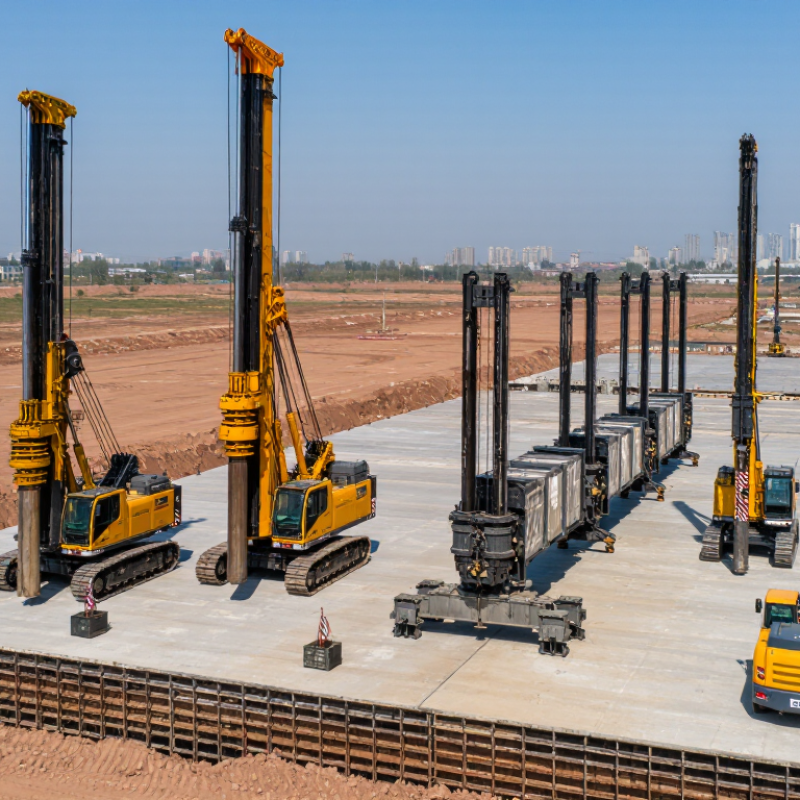
A hydraulic static pile driver installs piles by pressing them into the ground with controlled hydraulic force rather than driving them with repeated hammer blows. Its clamping jaws grip a pile section, while hydraulic cylinders push it downward. The machine resists that force through its own weight, counterweights, or piles already installed nearby. Quiet work. This method can reduce vibration and noise, which matters beside occupied buildings or sensitive equipment.
In 2026, machines may be selected by their reaction system, frame size, and ability to handle different pile shapes. Some rely mainly on counterweights; others use a pile-to-pile reaction system. The right setup depends on the ground, available working space, and required pile capacity. A compact unit may suit a restricted site, but it still needs room for pile sections and safe equipment movement.
Static pressing is not suitable for every soil profile. Dense layers, buried obstructions, or limited reaction capacity can slow installation or require another method. Crews should review ground investigation data and monitor pressing force and pile movement during work. “Low vibration” does not mean no ground movement. That distinction is easy to overlook, and I would not assume a quiet machine guarantees a trouble-free installation.
What Are the Top Hydraulic Static Pile Driver Types in 2026? - What Is a Hydraulic Static Pile Driver?
Hydraulic static pile drivers press piles into the ground using hydraulic force rather than impact blows. The types below are grouped by their reaction system, mobility, or operating configuration; these categories can overlap, and actual capabilities vary by machine and site conditions.
| Type | How It Works | Typical Piles and Applications | Main Advantages | Key Considerations |
|---|---|---|---|---|
| Counterweight-reaction type | Uses the machine’s dead weight and added counterweights to provide the reaction force for pressing piles. | Commonly used for precast concrete piles in sites where the working platform can support the machine and its concentrated loads. | Does not require installed reaction piles; can provide a self-contained pressing setup. | Requires adequate ground bearing capacity, transport planning, and space to handle counterweights. |
| Anchor-pile reaction type | Clamps previously installed piles and uses them as reaction points while pressing subsequent piles. | Useful for sequential piling where suitable piles can be installed and safely engaged as anchors. | Can reduce reliance on large counterweights and may suit restricted-access or waterfront work. | Anchor capacity, pile condition, connection details, and the installation sequence must be checked by the project team. |
| Combined reaction type | Combines machine weight or counterweights with reaction from installed piles, where the machine design allows it. | May be considered for projects with changing ground, access, or reaction requirements along the pile line. | Offers flexibility in how the pressing reaction is supplied. | The permitted load sharing and operating arrangement are machine-specific and need engineering verification. |
| Self-walking or step-moving type | Uses hydraulic legs or a stepping mechanism to reposition the machine between pressing locations. | Often suited to repetitive pile rows on relatively prepared working platforms. | Can move without relying solely on conventional wheeled travel and can position the press around a pile line. | Movement is still dependent on platform stability, machine layout, and the available working space. |
| Crawler-mounted type | Combines a hydraulic static pressing unit with crawler tracks for travel and positioning on site. | Can be considered where the work area is larger or travel between pile locations is frequent. | Provides tracked mobility and can reduce the need for separate short-distance repositioning equipment. | Tracks do not eliminate ground-pressure limits; access, turning space, and platform design remain important. |
| Compact or low-headroom type | Uses a reduced-height or compact arrangement to operate where overhead clearance or access is restricted. | May be used inside buildings, beneath overhead structures, or in confined urban work areas, subject to pile and site requirements. | Can access locations that may not accommodate a standard-height machine. | Check available stroke, pile-jointing method, reaction setup, access dimensions, and required pressing capacity. |
Selection depends on pile type and dimensions, required installation force, soil profile, site access, working-platform capacity, noise and vibration limits, and the project’s installation sequence. Confirm machine-specific limits and ground conditions with the equipment supplier and project engineer.