Sourcing Ayurvedic Herbs for international markets takes more than comparing prices or browsing polished product photos. Buyers need to understand what each supplier can document, how materials are handled, and whether communication remains clear when specifications change. A sample of dried ashwagandha, for example, may look clean and uniform, but appearance alone cannot confirm its botanical identity, origin, or batch consistency. Details matter.
This guide introduces suppliers serving global buyers and outlines practical questions to ask before placing an order. Look for clearly stated plant names, country-of-origin information, batch records, and relevant quality documents. Check whether testing and certifications match your product requirements and destination market; requirements can differ, so verify them independently. Ask about harvest timing, moisture control, packaging, minimum order quantities, and lead times. Paperwork helps, but it should be specific to the product and lot.
Supplier claims deserve careful review. A responsive sales contact is useful, yet buyers should also assess how concerns are handled and whether records can be traced from shipment to source. One difficult point is that no short profile can prove long-term reliability. Use the listings as a starting point, request current documentation, and compare answers against your own quality criteria. The best-fit supplier is not always the largest or cheapest; sometimes it is the one that explains its limits plainly.
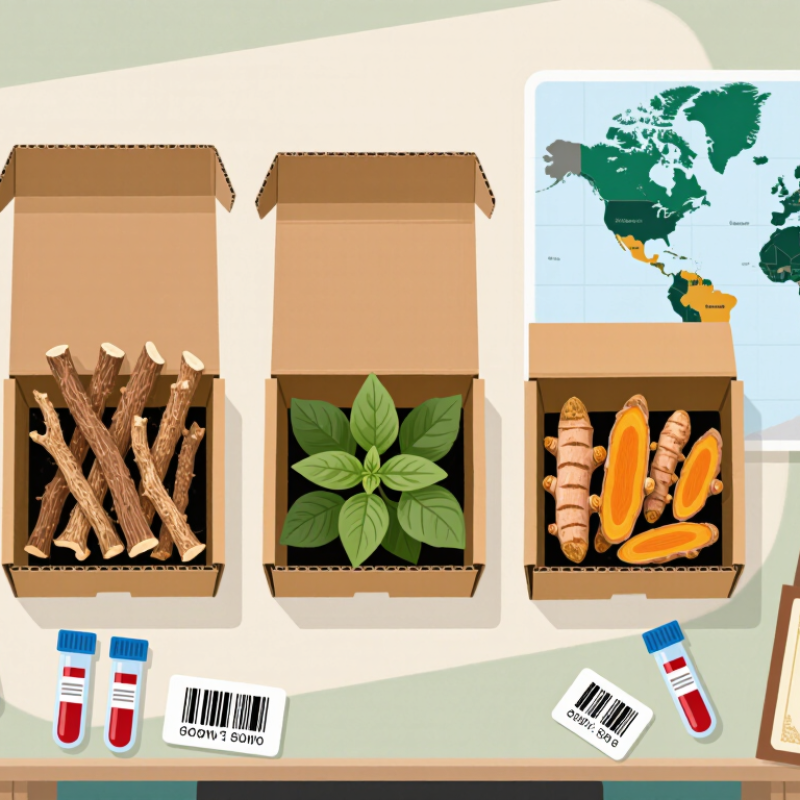
Global buyers need more than dried leaves in sealed cartons. Reliable suppliers provide botanical identification, origin details, harvest information, and clear product specifications. They may also share certificates of analysis covering identity, moisture, and relevant contaminant tests. WHO’s Global Report on Traditional and Complementary Medicine 2019 noted that 170 of 194 Member States reported using traditional and complementary medicine. This broad use makes dependable sourcing important, but it does not guarantee uniform quality.
Buyers can request representative samples, batch-specific documents, and details about storage and packaging. Look for traceability from harvest to shipment, plus prompt notice when a crop or specification changes. Export documents and testing needs vary by destination, so confirm requirements with qualified import specialists. A certificate alone is not proof of every quality claim. Ask what each test measures.
Tips: Compare samples with written specifications before placing a large order. Keep retained samples and review each batch on arrival. Small details matter. Suppliers may provide useful records, but buyers should still verify them independently. I would not treat a neat document set as a substitute for careful checks.
Major Ayurvedic herbs come from distinct growing zones, and origin can shape aroma, color, and active-constituent profiles. Ashwagandha is commonly cultivated in Rajasthan and Madhya Pradesh, where dry conditions suit its hardy roots. Turmeric is sourced from Indian states including Telangana, Maharashtra, and Tamil Nadu; buyers should specify rhizome grade and curcumin testing. Neem leaf and seed supplies are also associated with India’s warmer regions. Yet a place name alone proves little.
The World Health Organization’s 2019 Global Report on Traditional and Complementary Medicine found that 170 of 194 WHO Member States reported traditional medicine use. That broad demand makes dependable sourcing important, but it does not verify any herb’s quality. Request harvest-year records, botanical identification, pesticide and heavy-metal results, and traceability to the growing area. Supplier claims need checking. I’ve seen attractive origin descriptions obscure mixed lots; even careful buyers can miss that.
Tips: Match the botanical name to the purchase specification, then request a recent certificate of analysis for the exact lot. Ask whether material is cultivated or wild-collected, and how drying and storage are controlled. Small samples help. Compare color, smell, and test results before approving bulk shipments.
| Herb | Botanical Name | Commonly Traded Plant Part | Key Sourcing Regions | Common Commercial Forms | Buyer Checks |
|---|---|---|---|---|---|
| Ashwagandha | Withania somnifera | Root | India, especially Rajasthan, Madhya Pradesh, and Gujarat | Dried root, cut root, powder, extract | Confirm root identity, moisture, foreign matter, and extract specifications where applicable. |
| Turmeric | Curcuma longa | Rhizome | India, including Telangana, Maharashtra, Tamil Nadu, and Odisha | Dried rhizome, fingers, powder, extract | Check curcuminoid specification if relevant, color consistency, and testing for contaminants or unauthorized dyes. |
| Amla | Phyllanthus emblica | Fruit | India, including Uttar Pradesh, Madhya Pradesh, Rajasthan, and Tamil Nadu | Dried fruit, slices, powder, extract | Verify botanical identity, fruit condition, moisture, and the method used for any marker-compound claims. |
| Tulsi (Holy Basil) | Ocimum tenuiflorum | Leaves and aerial parts | India, including Madhya Pradesh, Uttar Pradesh, and Maharashtra | Dried leaves, cut herb, powder, extract | Specify the plant part and species; assess aroma, color, and foreign matter. |
| Neem | Azadirachta indica | Leaves, bark, or seeds, depending on use | India, particularly arid and tropical regions such as Rajasthan, Gujarat, Andhra Pradesh, and Tamil Nadu | Dried leaves, leaf powder, bark, seed, seed oil | Clearly distinguish the plant part and intended grade; request contaminant testing and traceability. |
| Guduchi (Giloy) | Tinospora cordifolia | Stem | India, including Madhya Pradesh, Maharashtra, and Odisha | Dried stem, stem powder, extract | Confirm species and stem identity, and review collection or cultivation records. |
| Brahmi | Bacopa monnieri | Whole herb or aerial parts | India, including wetland-growing areas of West Bengal, Odisha, and Kerala | Dried herb, powder, extract | Do not confuse Bacopa monnieri with plants also sold under the common name “brahmi”; confirm identity and plant part. |
| Shatavari | Asparagus racemosus | Root | India, including Rajasthan, Madhya Pradesh, and Maharashtra | Dried root, cut root, powder, extract | Request harvest and cultivation details; assess sustainable sourcing and root identity. |
| Licorice | Glycyrrhiza glabra | Root and stolon | India, including Jammu and Kashmir and Punjab; also sourced from Iran, Afghanistan, and Turkey | Dried root, cut root, powder, extract | Confirm origin and species; review glycyrrhizin specifications and applicable product requirements. |
| Moringa | Moringa oleifera | Leaves or seeds, depending on use | India, especially Tamil Nadu, Andhra Pradesh, and Karnataka | Dried leaves, leaf powder, seeds, seed oil | Specify leaf or seed material; check drying, microbial quality, moisture, and contaminant results. |
Sourcing regions are indicative rather than exclusive. Actual availability varies by harvest, cultivation, and trade; buyers should verify origin, botanical identity, plant part, and quality documentation for each lot.
Types of Suppliers in the Global Ayurvedic Herb Trade
The global Ayurvedic herb trade includes several supplier types. Growers cultivate specific plants and may offer closer insight into harvest timing and farm practices. Collectors and local aggregators source herbs from multiple small producers. Their networks can provide variety, though traceability may require extra attention. Processors and exporters clean, dry, sort, and prepare material for shipment. Ingredient distributors often hold stock closer to buyers and can support smaller orders. Each role has trade-offs. A larger supplier is not automatically more reliable.
Tips: Ask for the botanical name, plant part, origin, harvest period, and batch number. Request a sample and review relevant test results, such as identity, moisture, and contaminant screening. Check that documents match the actual lot. A tidy spreadsheet can still miss a changed source.
For global buyers, choose a supplier whose capabilities fit the order, not just the quoted price. Confirm packaging, storage conditions, lead times, and how complaints are handled. For example, dried leaves need protection from moisture and strong odors during storage. Requirements also vary by destination, so verify applicable import rules with qualified professionals. Supplier descriptions can sound polished; details sometimes remain unclear. Ask again, and keep the answer on record.
For global buyers, supplier evaluation should begin with a batch-specific paper trail, not a polished brochure. The WHO’s 2019 global report found that 170 of 194 Member States reported using traditional and complementary medicine. That scale makes reliable sourcing important. Ask for the botanical name, plant part, country and region of origin, harvest date, and processing site for each lot. Check that the certificate of analysis matches the lot number on the shipment.
Testing needs context. A DNA-barcoding study published in BMC Medicine examined 44 herbal products and reported species substitution and contamination among the samples. It does not represent every market, but it shows why a generic test sheet is not enough. Request methods and results for identity, microbial limits, heavy metals, pesticides, and relevant adulterants. Review audit records and corrective actions, too. A supplier’s traceability system may look complete, yet weak links can remain between collectors, processors, and exporters.
Tips: Request one recent batch file and trace it backward to its harvest area. Compare labels, invoices, and test records. Ask who collected the plant and how records are checked. If answers are vague, pause; paperwork alone is not proof.
Global buyers evaluating Ayurvedic herb suppliers should verify export controls before placing an order. The WHO’s 2003 Good Agricultural and Collection Practices guidelines for medicinal plants emphasize traceable cultivation, harvesting, and handling. Request a batch-specific certificate of analysis showing botanical identity, plant part, moisture, microbial results, and relevant contaminant tests. Check that the Latin name and batch number match across the label, invoice, and test report. A polished document pack can still contain gaps.
Documentation and shipping rules vary by destination and product form. Common records include a commercial invoice, packing list, certificate of origin, and certificate of analysis. A phytosanitary certificate may also be required by the importing country. Confirm requirements with the buyer’s customs broker and relevant authorities before dispatch. UNCTAD’s Review of Maritime Transport 2024 reports that ships carry over 80% of global trade by volume, so port delays can affect delivery plans. Use sealed, moisture-resistant inner liners and sturdy cartons; record lot numbers on outer labels. The detail that often gets missed is checking the destination’s rules for the specific plant species.
Tips: Request document samples before production. Check carton weights against the packing list. Keep copies accessible.
Export standards, documentation, and shipping requirements
This checklist counts example documents, not universal legal requirements. Commercial invoices, packing lists, and transport documents are common shipment records. Certificates of origin, phytosanitary certificates, and CITES permits may depend on the destination, product, and species. Confirm current requirements with the importing country’s authorities and your freight forwarder.
Please fill in as much details as possible and we will take care of your request as soon as possible