
Starting your own Biotech Lab can be an exciting venture. With the global biotech market projected to reach $727.1 billion by 2025, many innovators are eager to contribute. The rapid growth arises from advancements in genetic engineering, genomics, and cell therapy. These areas not only drive research but also demand clean and well-equipped environments for experimentation.
A Biotech Lab facilitates discoveries that can change lives. It allows researchers to explore novel treatments for diseases. Setting up such a lab involves various challenges, including funding, regulatory compliance, and sourcing reliable equipment. A well-designed lab ensures safety and effectiveness, essential for credible results. Industry reports suggest that 70% of lab start-ups face initial technical hurdles. Understanding these obstacles is crucial for success.
As you consider starting your Biotech Lab, reflection on your goals is vital. Will the lab focus on research, product development, or both? Assessing your expertise and resources will guide your decisions. A clear vision can lead to impactful innovations that benefit society while navigating the complex biotech landscape.

A biotech lab serves as a hub for groundbreaking research and development. It specializes in the manipulation of biological systems and organisms for innovation. This lab type is pivotal in areas such as healthcare, agriculture, and environmental protection. Here, scientists apply their knowledge to create new drugs or genetically modified crops. The environment is collaborative and dynamic, fostering creativity.
Setting up a biotech lab requires more than just space and equipment. You need a clear vision and skilled professionals. It’s crucial to have a well-defined research focus. The team should include experts in molecular biology, bioinformatics, and regulatory affairs. Unforeseen challenges may arise. For instance, funding can be inconsistent. Navigating complex regulations is another potential hiccup.
Maintaining safety and compliance is non-negotiable. Instruments must be calibrated, and protocols should be followed stringently. Failure to meet these standards can lead to setbacks. Research results can be unpredictable. They often require multiple iterations to yield meaningful insights. It's a continuous learning process with its unique hurdles and rewards.
Choosing a research focus is crucial for a biotech lab. Start by evaluating market needs. According to a recent report from the Biotech Innovation Organization, the global biotech market is poised to reach $2.44 trillion by 2028. This growth offers ample opportunities for innovative research.
A well-defined objective is essential. Determine whether you aim to solve a specific health issue, improve agricultural output, or develop new materials. Align your research with trends identified in industry reports. For instance, 65% of biotech enterprises are focusing on gene editing technologies.
Consider potential challenges as well. A clear focus may lead to limited exploration in other important areas. Flexibility is key. Engaging in broader research can open unexpected doors. Balancing a targeted approach with openness to new ideas fosters innovation in your lab.
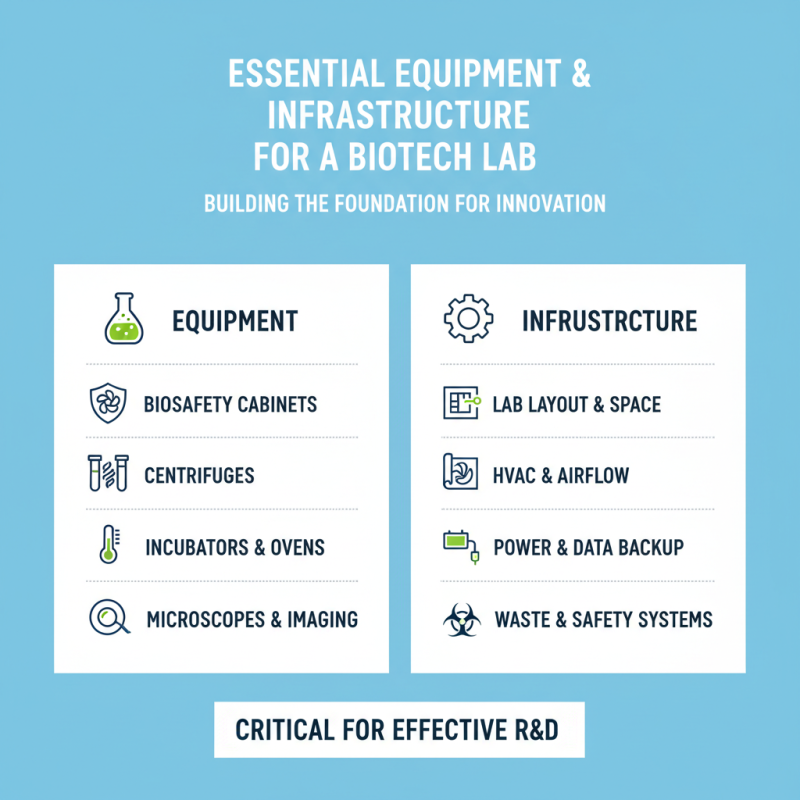
Building a biotech lab starts with essential equipment and infrastructure. This foundation is critical for effective research and development.
An ideal lab requires robust benches and storage areas. These spaces should accommodate various equipment while promoting an organized workflow. Essential tools include pipettes, centrifuges, and incubators. Each piece of equipment plays a unique role in experimental processes. For instance, a fully functional centrifuge is vital for separating samples efficiently.
Infrastructure is equally important. Consider ventilation systems to ensure safety. Proper air circulation protects against harmful biological materials. Additionally, think about investing in a reliable waste disposal system. This helps maintain a clean environment and reduces contamination risks.
Finally, regular training for lab personnel is crucial. Even the best equipment can fail without knowledgeable users. Continuous education and practice keep skills sharp. Reflect on your lab's setup often to identify areas for improvement.
Securing financial support for your biotech lab is crucial for successful research and development. Grants can be an excellent source of funding. Various organizations and government bodies offer grants to innovative projects. However, competition is fierce. Applications require clear proposals outlining your research goals and potential impacts. Focus on how your work can contribute to advancements in healthcare or environmental solutions.
Crowdfunding is another viable option. Platforms allow you to present your idea to the public. Engaging storytelling increases your chances. Communicate the significance of your research. Donors often support projects they connect with emotionally. Yet, keep in mind that crowdfunding requires ongoing communication and updates.
Venture capital may also be a path worth exploring. Investors look for promising biotech startups. They seek innovative ideas with a strong potential for returns. However, be prepared for rigorous scrutiny. You'll need a solid business plan and a clear vision. Networking with industry professionals can open doors to various funding opportunities. Always seek feedback to refine your approach.
| Funding Option | Description | Typical Amount | Eligibility |
|---|---|---|---|
| Government Grants | Funding provided by government agencies for biotech research and development. | $10,000 - $1,000,000 | Non-profit, academic institutions, startups |
| Venture Capital | Investment from VC firms in exchange for equity stake in the company. | $250,000 - $10,000,000 | Startups with high growth potential |
| Crowdfunding | Raising small amounts of money from a large number of people via online platforms. | $1,000 - $1,000,000 | Innovative projects with public appeal |
| Angel Investors | Wealthy individuals who provide capital for startups, often in exchange for convertible debt or ownership equity. | $25,000 - $2,000,000 | Early-stage startups, particularly in biotech |
| Corporate Partnerships | Collaborations with established companies that can provide funding and resources. | Varies widely | Startups with complementary technology or products |
Navigating legal and ethical considerations in biotechnology research is crucial for ensuring responsible innovation. Every researcher needs a solid understanding of regulatory frameworks. These regulations vary by country and location. Consulting local regulatory bodies can provide valuable insights. Familiarize yourself with guidelines for biosafety, human subjects, and genetic research. Documentation is essential for compliance.
Ethical considerations extend beyond legality. Whether conducting animal studies or human trials, transparency is vital. Obtaining informed consent from participants is a must. Researchers must prioritize the welfare of all living subjects. Developing clear communication about your study's purpose fosters trust. However, ethical dilemmas may arise unexpectedly. A commitment to ongoing reflection can guide better decision-making.
Creating an ethical lab environment involves more than following rules. Engage with diverse perspectives on biotechnology issues. This encourages a culture of accountability. Seek feedback on your methodologies and practices. Embrace imperfections in your approach as learning opportunities. Balance innovation with caution can lead to responsible breakthroughs in the biotech field.
Please fill in as much details as possible and we will take care of your request as soon as possible