Clay Litter is a familiar choice in many homes, but the label covers more than one product. Most varieties use absorbent clay to manage urine and odor. Clumping formulas commonly contain bentonite, which forms scoopable lumps when wet. Non-clumping clay absorbs liquid without forming firm clumps, so it may need more frequent full changes. Small detail, big difference.
The best type depends on your cat, your routine, and your home. A low-dust formula may suit a sensitive household, while larger granules can reduce tracking across the floor. In a busy home with several cats, strong clumping and reliable odor control may make daily cleaning easier. Yet no bag works perfectly for every cat. Some cats reject scented litter, avoid a suddenly changed texture, or kick fine grains beyond the tray. Watch how your cat uses the box, and introduce a new litter gradually rather than switching overnight.
Check the package for ingredient details, dust claims, and care directions. Then consider the practical trade-offs: price, weight, how often you scoop, and how much litter ends up around the mat. Clay products can vary in dustiness and performance, even within the same broad category. A little testing may be needed. This guide explains what clay litter is, how its main types differ, and which features can help you make a sensible choice. The right answer is not always the most expensive bag; it is the option your cat consistently uses and you can maintain well.
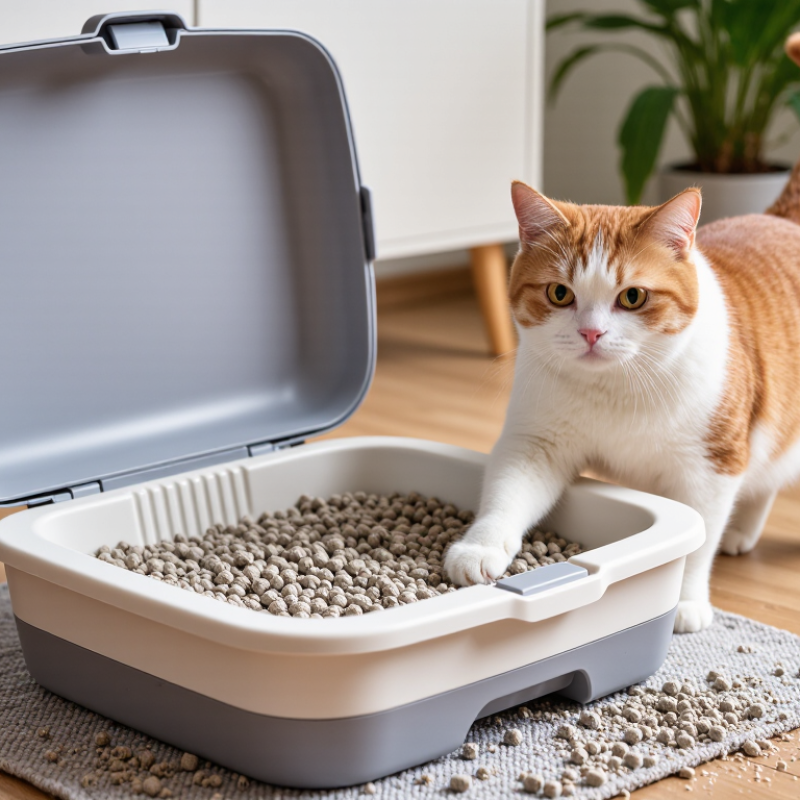
Clay litter is made from absorbent minerals, not one uniform material. Bentonite is common because it swells when wet. Sodium bentonite usually forms firm clumps, so a damp patch can be lifted with a scoop while dry granules remain. Calcium bentonite absorbs moisture too, but often swells less and may form weaker clumps. Results also depend on processing and particle size. Small details matter.
Other clay minerals, including sepiolite and attapulgite, can absorb liquid through porous structures. They are often used in non-clumping litters, where urine spreads through the granules and odor control depends on regular changes. A handful may feel light and crumbly, yet dust levels vary. Pour slowly. Fine dust can irritate sensitive cats or people, so watch for sneezing and avoid raising clouds when filling the tray. No litter is dust-free in every home. This is easy to overlook.
The best type depends on a household’s needs. Clumping bentonite may make daily scooping simpler, while non-clumping minerals can suit different cleaning routines. Check whether the cat accepts the texture and whether wet litter remains manageable after several days. A label cannot predict every tray. Mineral name alone is not a guarantee; ventilation, litter depth, cleaning habits, and individual sensitivity all affect the experience.
Clumping clay litter usually contains sodium bentonite, a mineral that absorbs liquid and binds into a scoopable mass. Under suitable conditions, it may expand to around 15 times its dry volume. The exact amount varies with mineral quality, granule size, and moisture. That number is striking, but it is not a guarantee for every litter. Non-clumping clay absorbs moisture too, but usually stays loose, so wet areas can be harder to remove completely.
The U.S. Geological Survey’s Mineral Commodity Summaries 2024 reports that absorbents accounted for about 17% of U.S. bentonite use in 2023. This is broader than cat litter alone, but it shows bentonite’s established role in absorbing liquids. In a litter box, the practical benefit is a firm clump that can be lifted with a scoop. Still, fine particles may create dust, and damp clumps can break apart if handled roughly. Performance matters more than the swelling claim on a label.
Tips: Add litter to a clean, dry tray at the depth recommended on its packaging. Scoop daily, and notice whether clumps hold together without crumbling. A little trial and error is normal. If dust bothers you or your cat, compare lower-dust options and observe how your cat responds.
Non-clumping clay litter absorbs urine into its granules rather than forming removable clumps. Liquid spreads through the litter bed, while solid waste stays on top and can be scooped out. The granules may look dry at the surface even when lower layers are damp. A quick check near the bottom of the tray can reveal what the surface hides.
Scoop solid waste daily, and stir the litter gently if the product instructions allow it. This can help expose wet areas and spread moisture, but it does not remove absorbed urine. Replace the litter when it feels damp, smells persistently sour after scooping, or has become heavy and dusty. There is no single schedule that fits every home; the number of cats, tray size, and litter depth all matter. I have found that waiting for a strong odor is often too late. Wash and dry the tray before refilling, since residue can linger in corners. Change the litter sooner if your cat avoids the box, but remember that a sudden switch in texture can also put some cats off. It is easy to miss that detail.
| Topic | What to Know | Practical Guidance |
|---|---|---|
| What non-clumping clay litter is | It is litter made from absorbent clay materials that take up moisture but are not designed to form firm, scoopable clumps. | It may suit households seeking a straightforward litter that can be removed and replaced as a full tray. |
| How absorption works | Liquid is drawn into and between the granules. Unlike clumping litter, the wet material generally remains mixed with the surrounding litter rather than binding into a solid clump. | Urine can spread toward the lower layers of the tray, so the surface may look dry even when litter underneath is damp. |
| Daily maintenance | Solid waste can be removed with a scoop, but urine-soiled granules are not always easy to separate from clean litter. | Remove solid waste daily. Check for damp areas and remove them where practical; add fresh litter only as a temporary top-up, not as a substitute for a full change. |
| Typical full-change interval | For one cat using one tray, a full change is often needed about once a week. This is a general starting point, not a fixed rule. | Replace sooner if the tray becomes wet, strongly odorous, or visibly soiled. More cats, smaller trays, or frequent use can shorten the interval. |
| Signs it is time to replace the litter | Persistent urine odor after waste removal, widespread dampness, saturated granules, or litter that stays wet are practical warning signs. | Empty the tray, wash it with mild soap and water, dry it thoroughly, and refill it with fresh litter. |
| Factors that affect replacement frequency | Number of cats, number and size of trays, litter depth, room ventilation, and each cat’s use of the tray all influence how quickly litter becomes soiled. | Check the tray at least daily and adjust the full-change schedule to its condition rather than relying only on the calendar. |
| Choosing a litter type | Non-clumping clay requires regular full replacement. Clumping litter is designed to let users remove urine-soiled clumps, while other litter materials have different handling and disposal needs. | Consider your cat’s acceptance, dust level, ease of cleaning, and the care routine you can maintain consistently. |
Note: Litter products and household conditions vary. Follow the product’s care directions, provide a clean tray, and ask a veterinarian about a sudden change in your cat’s urination or litter-box habits.
Clay litter is usually made from bentonite, which absorbs moisture; clumping grades form scoopable masses, while non-clumping grades absorb without binding. The 2023–2024 APPA National Pet Owners Survey counted 46.5 million U.S. cat-owning households. That figure shows the scale of litter use, but it does not rank products or prove one type works best.
Dust and tracking depend on particle size, processing, and how vigorously a cat digs. Fine grains may feel comfortable under paws, yet can scatter across tile and cling to fur. Low-dust claims are not a guarantee; pour a small amount slowly and watch for visible haze. Odor control also varies. Clumping clay lets owners remove wet spots daily, while non-clumping litter needs more frequent full changes as moisture spreads. A clean box matters more than fragrance. Strong perfume can mask odor without removing its source.
Compare cost per month, not just bag price: include how much litter you discard, how often you replace it, and any tracking cleanup. Clumping clay can cost more upfront but may reduce waste when scooped consistently. Results still vary by box size, humidity, and the cat’s habits. I would not assume the cheapest bag is cheapest to use; measuring one week’s consumption is a better test.
Clay litter is usually made from absorbent natural clay. Clumping varieties often contain bentonite, which forms scoopable lumps around urine. Non-clumping clay absorbs moisture but leaves wet areas in the tray. The right choice depends on your cat’s habits, not just the bag’s claims.
For one cat, clumping litter can make daily cleaning straightforward: remove waste, then top up the shallow spots. It may suit busy homes, though fine granules can travel beyond the mat. Non-clumping litter may work well for kittens learning the tray or cats that dislike dense clumps, but it needs frequent checking and regular replacement. Some cats disagree. Watch where they dig, and note any sudden change in tray use.
Your home matters, too. A small room may call for low-dust, unscented litter and a covered storage container, while a high-traffic hallway benefits from a sturdy mat beneath the tray. Pour slowly to limit airborne dust, and keep the tray somewhere calm and easy to reach. That matters. If your cat coughs or seems uncomfortable around dusty litter, reduce exposure and ask a veterinarian for guidance. No type stays perfect: compare tracking, odor, cleanup time, and your cat’s comfort over a couple of weeks.
Clay litter is commonly sold as clumping or non-clumping. Clumping clay typically uses bentonite to form scoopable clumps; non-clumping clay absorbs moisture without forming them.
How to read this chart: Scores are a qualitative guide, not standardized test results. Clumping litter is generally easier to spot-clean, while non-clumping litter may suit households that prefer a simpler, non-clumping option. Dust and tracking vary by product, so check the specific litter and your cat’s preferences.
Please fill in as much details as possible and we will take care of your request as soon as possible