
How to Choose the Best Foot and Ankle Brace?

Choosing the right Foot And Ankle Brace is not simply a matter of selecting the strongest support. The correct design depends on injury type, activity level, joint stability, swelling, and personal comfort. A runner recovering from a lateral ankle sprain may need controlled movement, while someone with chronic instability may require firmer side-to-side protection. Fit matters too. A brace that presses against the heel or slips during walking can create new discomfort.

The need for informed choices is substantial. The World Health Organization reports that approximately 1.71 billion people live with musculoskeletal conditions worldwide. Foot and ankle problems often affect mobility, work, exercise, and confidence. The American Academy of Orthopaedic Surgeons identifies ankle sprains as common injuries, especially during sports and uneven-ground activities. Meanwhile, the 2021 clinical practice guideline published in the Journal of Orthopaedic & Sports Physical Therapy supports external ankle support, combined with progressive rehabilitation, for many acute lateral ankle sprains. A brace is helpful, not magical.

Industry research also reflects growing demand for foot and ankle support products. Grand View Research’s Foot and Ankle Braces Market reports examine rising sports participation, injury prevention awareness, and an aging population. However, market growth does not prove that every product performs equally well. That assumption needs questioning. This guide examines brace types, materials, stability levels, sizing, and practical use. It also considers when professional assessment is wiser than online shopping. The best Foot And Ankle Brace should support movement without replacing strength, balance training, or medical advice. Small details matter, especially after swelling changes throughout the day.
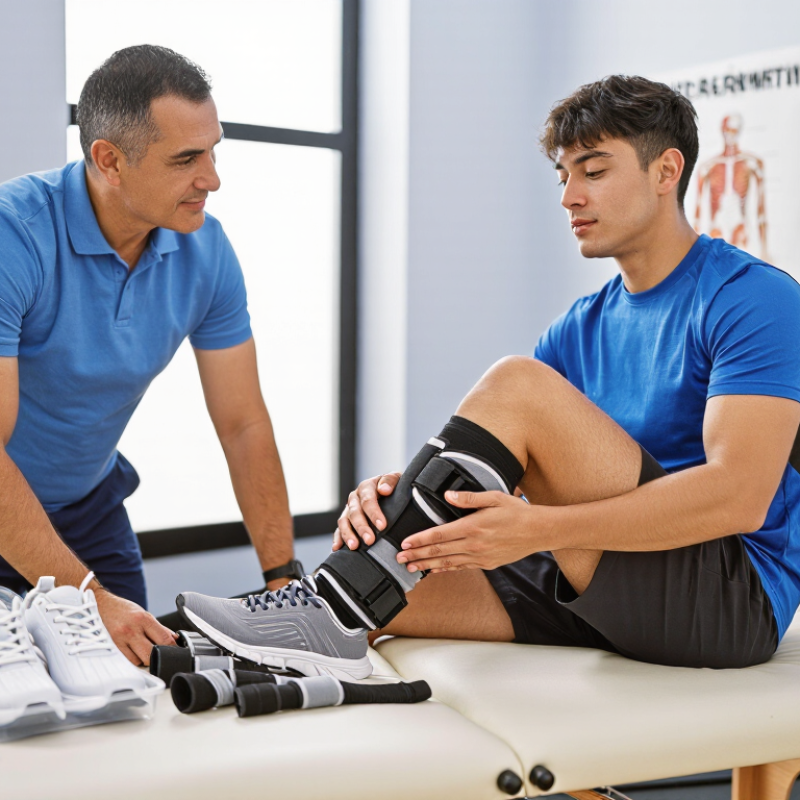
How to Choose the Best Foot and Ankle Brace?

Define Injury Type: Match Braces to AAOS Sprain Grades I–III

How to Choose the Best Foot and Ankle Brace?

Define Injury Type: Match Braces to AAOS Sprain Grades I–III

The American Academy of Orthopaedic Surgeons classifies ankle sprains as Grades I, II, or III. This grading helps connect injury severity with appropriate support. Grade I usually involves stretched ligaments, mild tenderness, and limited swelling. A flexible sleeve or compression brace may provide comfort during walking.

Grade II indicates a partial ligament tear, often with bruising, swelling, and some instability. A lace-up or semi-rigid brace can limit painful side-to-side movement while allowing controlled motion. Check the fit around the ankle bones. It should feel supportive, not numb or painfully tight.

Grade III involves a complete ligament tear and significant instability. Walking may be difficult, and swelling can appear quickly. A rigid brace, walking boot, or temporary immobilization may be considered after professional assessment. A brace alone may not be enough.

Do not diagnose the grade by appearance alone. Pain can be surprisingly mild, even with serious damage. In practice, people often choose excessive support too early, then avoid necessary movement. That approach can slow recovery. Seek medical evaluation if you cannot take four steps, feel marked tenderness over a bone, or notice numbness, cold skin, or worsening deformity. Recheck the brace after ten minutes of walking; pressure points and slipping are useful warnings.

Measure Fit Precisely: Compare Ankle Circumference With Brand Sizing Data

Choosing a foot and ankle brace starts with a tape measure, not a guess. In clinical fitting work, I measure the ankle over bare skin and record the location. Place the tape around the narrow area just above the ankle bones, unless the sizing chart gives different instructions. Keep it flat and snug. Do not pull it tight. Measure twice. My first measurement is not always perfect, especially after activity when swelling appears.

Compare that number directly with the brace’s sizing data. Charts are not universal. One medium may cover 22–25 centimeters, while another uses foot length or calf circumference. Follow the chart’s measuring point exactly. If your measurement falls near a boundary, measure again later in the day. This can reveal ordinary swelling. Record both results. A brace should feel secure without causing pressure, tingling, cold toes, or color changes. Walk for several minutes and check your skin. Persistent marks deserve attention.

Material and design also change fit. A rigid stabilizer may need more room than a thin compression sleeve. Wear the sock you normally use during measurement. Avoid choosing a smaller size for “extra support.” That idea sounds reasonable, but it can restrict circulation. If measurements conflict with the chart, ask a licensed clinician or trained fitter to assess the brace. I sometimes overlook swelling near the end of the day. That mistake is useful: fit should reflect real use, not a perfect morning measurement.

Select Support Level: Apply AOFAS Guidance on Stability and Motion Control

How to Choose the Best Foot and Ankle Brace?

Select support by matching stability needs with motion control. The American Orthopaedic Foot & Ankle Society (AOFAS) emphasizes clinical assessment before choosing treatment. A mildly sore ankle may need compression and gentle support. Repeated giving-way usually requires a semi-rigid brace. A rigid design can limit painful motion after a significant injury, but it may also reduce natural movement. That trade-off matters.

Test the brace with the shoe you actually wear. Walk across a room, turn slowly, and check for heel movement. Your toes should stay warm and flexible. The brace should feel firm, not crushing. AOFAS guidance supports protecting the ankle while restoring useful motion, rather than immobilizing every problem. This is easy to overlook. More support is not always better.

Age and fall risk also influence the decision. The Centers for Disease Control and Prevention reports that more than one in four adults aged 65 years or older falls each year. For these users, excessive restriction can affect balance and walking confidence. A clinician should review swelling, strength, gait, and skin condition. Replace a brace when straps stretch or pressure marks remain after removal. I have seen users choose a rigid brace for minor discomfort, then stop wearing it because stairs become awkward. The right level is the one that controls unwanted motion without creating new limitations.

Verify Safety: Check FDA Classification and ASTM Material-Test Standards

How to Choose the Best Foot and Ankle Brace?

Safety should guide every brace decision. The World Health Organization reports that musculoskeletal conditions affect about 1.71 billion people worldwide. That figure includes many conditions involving movement, stability, and pain. A brace is not automatically safe because it feels firm. Check its intended use, risk category, and regulatory information. The FDA Product Classification Database can show whether a device is generally Class I or Class II. Classification depends on the product’s claims and design. It does not prove that every brace suits your injury.

Material evidence matters too. ASTM D412 measures elastomer tensile strength, while ASTM D624 evaluates tear resistance. ASTM D395 examines compression set after sustained pressure. These tests can reveal how rubber or foam may behave during repeated use. However, ASTM compliance is not FDA clearance. Ask for test reports showing the tested material, sample lot, conditioning method, and acceptance limit. A missing detail should raise questions.

Tips: Compare the report with the actual brace. Check seams, straps, skin-contact fabric, and sizing instructions. A brace can feel comfortable yet restrict circulation after an hour. Remove it if numbness, cold toes, swelling, or color changes appear. Seek professional assessment for severe pain, deformity, or inability to bear weight. I would also question vague claims such as “medical grade.” That phrase alone explains very little. The label can still mislead.

Compare Wearability: Evaluate Evidence on Comfort, Recovery, and Reinjury Risk

How to Choose the Best Foot and Ankle Brace?

A brace should support recovery without becoming another source of pain. During a clinic fitting, I look for stable heel control, gentle compression, and unrestricted toe movement. Comfort matters because people often remove uncomfortable braces before completing daily activities. A secure fit may reduce unwanted ankle motion, but it cannot guarantee protection from reinjury. Evidence generally supports bracing for some ankle sprains, especially during sports and early rehabilitation. However, outcomes vary with injury severity, exercise quality, and consistent use.

Try walking across a room before judging the brace. Check whether the edge rubs your skin or presses against the ankle bone. Your foot should feel supported, not numb or cold. Recovery also requires strength, balance, and gradual loading. A brace may help, but it should not replace professional assessment. I have seen people choose maximum stiffness, then avoid movement completely. That approach can feel safe, yet it may slow confidence and functional recovery.

Tips: Wear the brace with the intended shoe and test it for short periods. Inspect redness after removing it. Persistent swelling, numbness, worsening pain, or unstable walking deserves clinical advice. Ask whether the brace matches your injury and activity. Do not assume a higher price means better evidence. Research is still limited for some brace designs, and personal comfort is not a perfect measure of protection. That uncertainty is worth acknowledging.

Request for Quote

Please fill in as much details as possible and we will take care of your request as soon as possible

Skip to content