Biotech Research turns living systems into practical knowledge, medicines, materials, and agricultural tools. It may begin with a small observation: yeast growing differently, a protein folding unexpectedly, or cells responding to a chemical signal. Researchers then form a question, design an experiment, collect evidence, and revise their assumptions. The process is rarely neat. Some results are confusing. Others fail completely.
Nobel Prize–winning scientist Frances Arnold has said, “A good scientist is a person with the right combination of curiosity, ambition, and humility.” That balance defines responsible Biotech Research. Curiosity identifies possibilities. Expertise shapes reliable experiments. Humility accepts that a promising result may not survive repeated testing. A laboratory notebook, sterile pipettes, sequencing data, and carefully labeled samples can matter as much as an exciting idea.
This article explains how Biotech Research works across discovery, testing, validation, and development. It explores tools such as genetic analysis, cell culture, protein engineering, and computational modeling. It also considers peer review, reproducibility, safety controls, and ethical oversight. A potential therapy cannot move forward because one test looks impressive. Researchers must examine toxicity, dosage, manufacturing quality, and patient relevance. Even then, uncertainty remains. Biology is complex. Human responses vary.
The field offers remarkable promise, but it deserves careful judgment. A beautiful result may still be incomplete. A failed experiment may reveal the better question. Understanding that tension makes biotech research easier to evaluate and more realistic to appreciate.
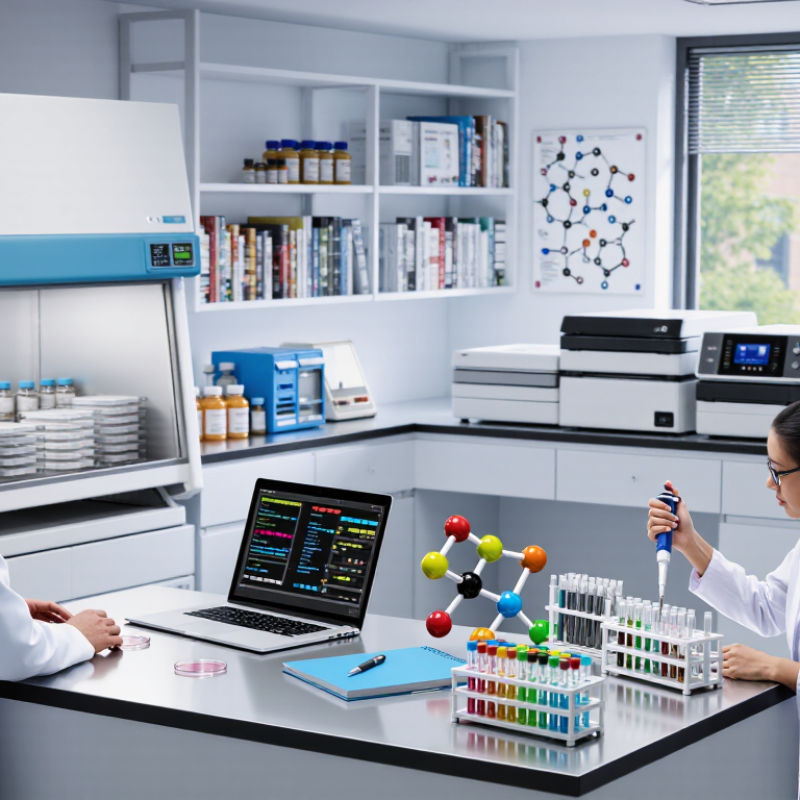
Biotech research uses living cells, biological molecules, and organisms to answer scientific questions or solve practical problems. Researchers may study how cells communicate, how genes influence disease, or how microbes produce useful materials. Their work often begins with a focused question and a testable hypothesis.
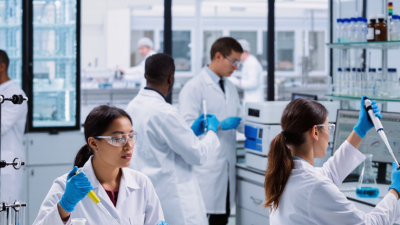
In a laboratory, a team might grow cells in controlled dishes, measure protein activity, and compare treated samples with untreated controls. Small details matter. Temperature, timing, and contamination can change results. Researchers record procedures carefully, repeat key experiments, and use statistical methods to judge whether findings are meaningful. I have found that clear documentation often matters as much as technical skill.
Biotech research supports modern science by connecting basic biology with medicine, agriculture, environmental studies, and industrial processes. It can help identify disease mechanisms, improve diagnostic methods, or develop more efficient biological production systems. However, promising results do not guarantee safe or useful applications. A result from a cell culture may not work in an animal or human setting. That gap demands patience.
Good research also requires ethical review, transparent reporting, and attention to possible risks. Scientists should explain uncertainty instead of hiding it behind confident language. Mistakes happen. Unexamined assumptions happen too. Independent replication, data sharing, and careful peer review help separate reliable evidence from an attractive but incomplete idea.
Biotech research begins with a precise question, not a fascinating organism. “Can this enzyme reduce plastic waste at 30°C?” is stronger than “How does this enzyme work?” The question defines measurements, controls, and acceptable evidence. UNESCO’s Institute for Statistics reported global research and development spending reached 1.95% of GDP in 2022. That investment increases pressure to choose experiments carefully.
Selecting a biological system is a practical decision. Yeast may reveal metabolic pathways quickly and cheaply. Human organoids can model tissue responses more realistically, but they require complex culture conditions. Animal models may show whole-body effects, yet they introduce ethical, biological, and interpretation limits. The World Health Organization’s Global Observatory on Health R&D emphasizes that research priorities should reflect unmet health needs, not only technical opportunity.
A useful plan links the question, system, and endpoint. For example, researchers might expose liver organoids to three concentrations, measure enzyme activity after 24 hours, and include untreated controls. Replication matters. A single promising result is not reliable evidence. A clean model can still mislead. Cell lines may adapt to laboratory conditions and behave differently from human tissue. Researchers should record these weaknesses before interpreting results. I would also challenge the model choice repeatedly, because convenience can quietly replace scientific relevance. Data from registries and peer-reviewed reports can support that decision, but they cannot remove uncertainty from living systems.
| Research Area | Example Research Question | Suitable Biological System | Why This System Is Useful | Typical Experimental Readouts | Important Controls and Limitations |
|---|---|---|---|---|---|
| Gene Function | Does a specific gene influence cell growth or survival? | Cultured mammalian cells | They permit controlled gene perturbation and direct measurement of cell-level effects. | Cell number, viability, proliferation rate, gene expression, and protein abundance | Use non-targeting controls, untreated controls, and multiple independent perturbations. Cell culture may not reproduce tissue-level interactions. |
| Protein Structure and Function | How does a protein’s structure determine its activity? | Purified protein or a cell-free biochemical system | The system reduces biological complexity and allows direct testing of binding, catalysis, or stability. | Enzyme activity, binding affinity, folding stability, and structural measurements | Include inactive or altered protein controls and replicate measurements. Purified proteins may behave differently in living cells. |
| Cell Signaling | How does an extracellular signal activate an intracellular pathway? | Immortalized cell culture or primary cells | Cells retain receptors and signaling components that can be measured after controlled stimulation. | Phosphorylation, transcriptional response, calcium flux, and cellular morphology | Control signal concentration, exposure time, cell density, and passage number. Immortalized cells may have abnormal signaling. |
| Drug Discovery | Can a compound alter a disease-relevant biological process? | Target-based assay followed by disease-relevant cells | A staged approach first measures direct target activity and then tests cellular effects. | Dose-response relationship, target engagement, viability, pathway activity, and selectivity | Include vehicle, positive, and toxicity controls. Activity in vitro does not guarantee absorption, distribution, metabolism, or safety in an organism. |
| Microbial Physiology | How does nutrient availability affect microbial growth? | A non-pathogenic microbial culture | Microbial growth is rapid, measurable, and responsive to defined environmental conditions. | Optical density, colony-forming units, metabolite concentration, and growth rate | Maintain consistent temperature, pH, aeration, and inoculum size. Growth in a defined medium may not represent natural communities. |
| Host–Microbe Interaction | How does a microorganism influence host-cell inflammatory responses? | Host cell culture, organoid, or co-culture model | These models allow interaction between microbial factors and host biological responses to be examined. | Cytokine production, barrier integrity, cell damage, and host gene expression | Use mock-exposed controls and verify microbial exposure levels. Simplified models may omit immune, vascular, or neural components. |
| Developmental Biology | Which signals guide cells toward a particular developmental fate? | Stem-cell-derived organoid or differentiated cell model | These systems can reproduce selected features of tissue organization and cell differentiation. | Cell-type markers, morphology, spatial organization, and functional activity | Assess differentiation efficiency and batch variation. Organoids may lack full vascular, immune, or mechanical support. |
| Physiology and Disease Modeling | Does a genetic or environmental change produce a disease-associated phenotype? | Animal model or human tissue-based model | Whole-organism or tissue models capture interactions among organs, metabolism, behavior, and immune responses. | Clinical or behavioral measurements, histology, physiological parameters, and molecular biomarkers | Use appropriate comparison groups, randomization, blinding, and adequate sample size. Results may not translate directly across species. |
| Data-Driven Biology | Which molecular features are associated with a biological state? | Cell populations, tissue samples, or publicly available biological datasets | Large datasets can reveal patterns across genes, proteins, metabolites, or cell types. | Differential expression, clustering, pathway enrichment, and predictive performance | Separate training and validation data, correct for multiple testing, and validate key findings experimentally. Correlation does not establish causation. |
| Research Translation | Does a laboratory finding remain reliable under more realistic biological conditions? | A sequence of complementary systems, from biochemical assays to tissue or organism models | Using multiple systems tests whether an observation is robust across increasing levels of biological complexity. | Reproducibility, dose response, mechanism confirmation, safety indicators, and functional outcomes | Predefine success criteria and report negative results. Every model has assumptions, and no single system fully represents human biology. |
Biotech research generally moves from a clearly defined question to a testable hypothesis, an appropriate biological system, measurable outcomes, controlled experiments, and independent validation.
Biotech research begins with a measurable question about cells, genes, proteins, or living systems. A strong hypothesis predicts what should happen and why. For example, researchers may ask whether a nutrient changes cell growth under controlled conditions. The experiment must separate the tested factor from unrelated influences. Researchers define controls, select sample sizes, and record procedures before collecting data.
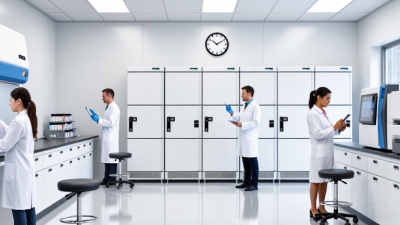
In a laboratory, details matter. A researcher labels each tube, checks instrument settings, and records temperature changes. Samples may be measured several times to identify inconsistent results.
Data can include growth rates, genetic signals, images, or chemical concentrations. Statistical analysis helps distinguish meaningful patterns from random variation. However, clean numbers do not automatically prove a hypothesis. Poor sampling or hidden bias can distort an attractive result.
The process is rarely neat. An early experiment may produce unclear data. That failure can reveal a weak control or an unsuitable measurement method. Researchers revise the design carefully, rather than changing the hypothesis to fit convenient results. Independent replication strengthens confidence. Transparent records also allow other scientists to examine the work and repeat key steps. Ethical review remains essential when research involves people, animals, or environmental release. Even experienced teams make mistakes. The important practice is finding them, reporting them, and improving the next experiment.
Biotechnology research turns biological observations into testable evidence. An experiment may examine gene activity, cell growth, enzyme behavior, or treatment responses. The difficult work begins after data collection. Raw measurements need careful cleaning, clear labeling, and a record of every procedural change. Small details matter, such as sample temperature, exposure time, and instrument calibration.
Researchers compare results with appropriate controls, not convenient comparisons. Biological replicates show whether a pattern remains across independent samples. Technical replicates can reveal measurement noise. Statistical analysis then estimates variation, effect size, and uncertainty. A striking result is not automatically a reliable result. It may reflect selection bias, contamination, or an accidental laboratory error. That possibility must stay visible.
Validation requires repeating the study under similar conditions and, when possible, using a different method. For example, an observed change in protein activity might be checked through another assay and an independent sample group. Researchers should document failed attempts, missing data, and unexpected findings. These records strengthen scientific credibility, even when they make the story less polished. Peer review adds another layer of scrutiny, but it cannot replace transparent methods or sound controls. I have found that clear notes often expose weak assumptions earlier than advanced statistics. That is uncomfortable. It is also useful. Some findings remain promising but unconfirmed until other teams reproduce them.
Biotech research studies living cells, genes, enzymes, and biological systems to solve practical problems. Researchers begin with a focused question, then test an idea through laboratory experiments. Results are measured carefully, repeated, and compared with controls. The process is rarely tidy. Some promising results fail when conditions change.
In medicine, biotech discoveries can support vaccines, diagnostic tests, tissue repair, and treatments designed for specific biological targets. A useful therapy must pass several stages, including safety studies, clinical trials, and regulatory review. Researchers examine side effects, dosage, and long-term outcomes. A single successful experiment proves very little. Reliable evidence needs independent review and repeated findings.
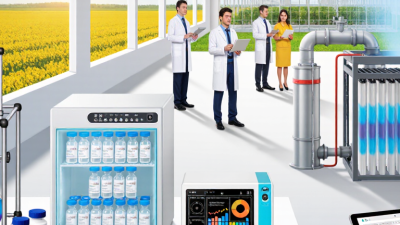
Agriculture applies biotech to improve crop resilience, nutrition, and disease detection. Scientists may study plants that tolerate drought or develop biological methods for reducing crop damage. Field trials matter because soil, weather, and local ecosystems can alter laboratory results. In industry, microbes and enzymes help produce materials, food ingredients, medicines, and lower-waste chemicals. Controlled fermentation tanks require careful monitoring of temperature, oxygen, and contamination.
Practical judgment remains essential. A method may be efficient but too expensive for small farms or local manufacturers. Another may reduce waste while creating new environmental questions. Responsible biotech research connects technical performance with safety, access, and measurable public benefit. Mistakes still happen, so transparent records and honest reporting are not optional.
Please fill in as much details as possible and we will take care of your request as soon as possible