
7 Biotech Lab Equipment Buying Tips for Global Buyers
Choosing equipment for a Biotech Lab involves more than comparing prices or choosing the newest model. Global buyers also need to consider local voltage, plug types, shipping conditions, installation, and access to technical support. A centrifuge may meet a laboratory’s capacity needs but still require adapters, compatible rotors, or a service plan. Small details matter.
A low quote can look attractive. Not always. Replacement parts, calibration, staff training, and delivery costs may change the total cost of ownership. Product claims should be checked against technical specifications, warranty terms, and relevant quality documentation. Requirements differ by application and location, so confirm details with the manufacturer and your institution’s procurement or compliance team. A checklist helps, but it cannot replace careful review.
This guide presents seven practical buying tips for global laboratory teams. It covers needs assessment, equipment specifications, supplier evaluation, shipping, after-sales service, budgeting, and documentation. Before requesting quotes, list the procedures the equipment must support, expected sample volumes, available bench space, and any environmental limits. Ask suppliers about installation timelines and how they handle service requests across borders. Compare like with like, including accessories and consumables. Then verify important claims in writing.
No single supplier or instrument suits every laboratory. Some teams may prioritize fast local service; others may need specialized features or flexible payment terms. A comparison table can clarify trade-offs, though it will not make every decision simple. That is worth checking twice. With a measured process, buyers can reduce avoidable surprises and select equipment that supports reliable, repeatable work.
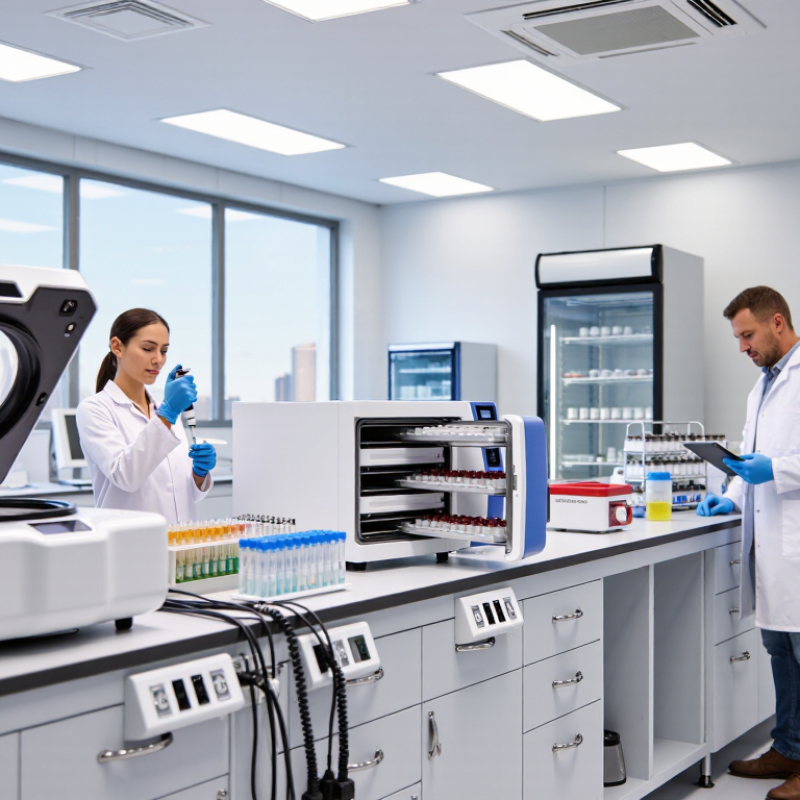
Define Your Laboratory’s Research and Equipment Requirements
Before comparing instruments, map the work your laboratory actually performs. List each research method, sample type, and daily operating step. Note whether staff need temperature control, sterile handling, optical measurement, or precise liquid transfer. Be specific. A centrifuge requirement, for example, should include tube capacity, speed range, and typical run duration.
Estimate present and expected workloads. Record how many samples arrive on an ordinary day and during peak periods. Include the number of users, available bench space, and access to power, water, ventilation, or network connections. Small details matter. A large instrument may fit on paper but block a cabinet door in the room. It is easy to overestimate future demand; a short pilot or usage log can help test that assumption.
Document the performance you need, not just the features that sound useful. Define acceptable measurement ranges, repeatability, throughput, and environmental conditions. Consider who will install, calibrate, clean, and maintain each unit, especially if local technical support is limited. Ask researchers and laboratory staff to review the requirements together. Their priorities may differ. Keep unresolved questions visible, such as whether a shared instrument can meet peak demand, and revisit them before requesting supplier quotations.
| Tip | Requirement to Define | Planning Questions | Example Planning Input | Equipment Implication |
|---|---|---|---|---|
| 1 | Research activities | Which processes will the laboratory perform: cell culture, molecular biology, protein analysis, sample preparation, or a combination? | Cell culture and PCR-based analysis; routine work with mammalian cells and nucleic-acid samples. | Map each workflow to required equipment, such as a CO₂ incubator, biosafety cabinet, centrifuge, thermal cycler, and cold storage. |
| 2 | Sample types and hazards | What materials will be handled, and what containment or decontamination procedures do local rules and risk assessments require? | Non-clinical cell lines and extracted nucleic acids; confirm the applicable biosafety level with the institution’s biosafety officer. | Choose containment equipment and work practices based on a documented risk assessment, not on a general equipment checklist alone. |
| 3 | Throughput and workload | How many samples, plates, or batches will be processed per day, and are workflows manual or automated? | Up to 24 samples per run, with approximately 3 runs per day; allow capacity for peak workloads and repeat testing. | Size centrifuges, pipettes, plate readers, and thermal cyclers around actual batch sizes, compatible vessels, and expected run frequency. |
| 4 | Required performance | Which measurement range, temperature range, speed, accuracy, or reproducibility does the validated protocol require? | For a refrigerated centrifugation step, document the required relative centrifugal force, rotor type, sample volume, and temperature set point. | Compare instruments using the specifications that affect the method; verify that rotor, tube, plate, and temperature requirements are supported. |
| 5 | Capacity and future growth | How many users will share each instrument, and is sample volume expected to increase during the equipment’s service life? | Four regular users sharing one workstation; plan for a 25% increase in annual sample volume over the next three years. | Check usable capacity, loading time, peak demand, and whether an additional unit or modular expansion will be needed. |
| 6 | Facility and utilities | Are the required space, electrical supply, heat removal, water, drainage, ventilation, and network connections available? | Record room dimensions, door and elevator clearances, outlet type and voltage, bench load limits, and any facility connection requirements. | Obtain installation drawings and utility specifications before purchase; include service access and safe clearance in the layout. |
| 7 | Compliance and lifecycle support | What documentation, calibration, qualification, maintenance, training, and service response are required at the laboratory’s location? | List applicable local electrical and safety requirements, acceptance testing, calibration intervals, user training, and expected service coverage. | Evaluate total ownership needs—including installation, consumables, maintenance, spare parts, and end-of-life handling—not purchase price alone. |
| Planning note: Example figures are starting points for requirements gathering, not universal specifications. Confirm final equipment capacity and performance against approved protocols, local regulations, facility constraints, and a documented risk assessment. | ||||
Related Posts
-

What Are the Best Biotechnology Research Companies in China?
-
China Top 10 Biotech Labs for Global Buyers
-
What Are the Top Biotechnology Products from China?
-

2026 Best Life Science Companies for Global Buyers?
-

10 Best Bio Tech Suppliers for Global Buyers?
-

2026 Top Leading Biotech Companies to Watch This Year?