Who Is the Best Lead Glasses Supplier in 2026?

Choosing the Best Lead Glasses Supplier in 2026 requires more than comparing prices or polished product photos. These glasses are working equipment, worn near the face during procedures involving X-rays. A poor fit can slip; heavy frames can become uncomfortable during long shifts.

The International Commission on Radiological Protection’s Publication 118 (2012) recommends an occupational equivalent dose limit for the lens of the eye of 20 mSv per year, averaged over five years, with no single year exceeding 50 mSv. This is a protection limit, not a product-performance rating. It helps explain why buyers should assess eyewear alongside workplace procedures and radiation-protection advice. Glasses alone cannot establish a safe exposure level.

A credible supplier should provide clear, model-specific information on lead equivalence, lens coverage, frame weight, fit options, optical quality, and applicable test documentation. Ask how these details are verified, and whether replacement parts and after-sales support are available. Look closely at the paperwork. Generic claims are not enough. A 2026 shortlist should compare suppliers using the same criteria and current evidence, rather than relying on rankings without disclosed methods. I cannot responsibly name one universal winner without transparent, independently checked comparisons. That uncertainty matters. The strongest choice will depend on the wearer, procedure, and purchasing requirements. A supplier that answers technical questions plainly may be more useful than one with the loudest claims.
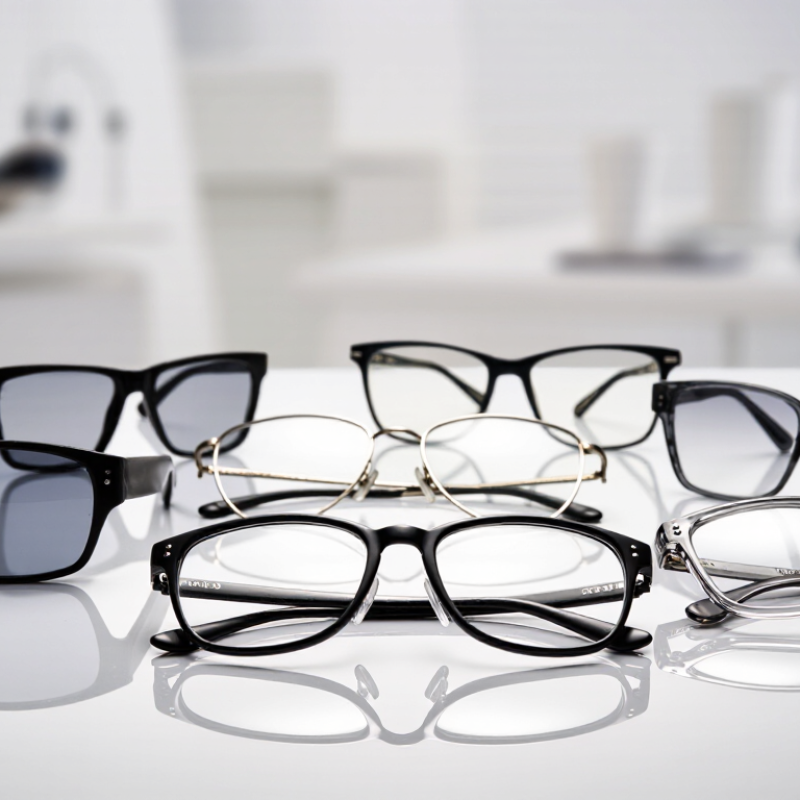
Who Is the Best Lead Glasses Supplier in 2026?

What Lead Glasses Do in Medical X-Ray and Fluoroscopy Settings

In medical X-ray rooms, lead glasses reduce exposure to the eye lens from scattered radiation. During fluoroscopy, staff may stand close to the patient while imaging continues, so scatter can reach the face repeatedly. The glasses place lead-equivalent material between the eyes and some of this radiation. They are a practical layer, not protection from every direction. Fit matters.

Frames should sit close without blocking peripheral vision. Side shields may help when scatter comes from an angle. A heavy frame that slips down can leave parts of the eyes less protected. Before choosing a supplier, check the stated lead equivalence, lens coverage, fit over prescription eyewear, and cleaning instructions. Ask a radiation safety professional to consider the room’s workflow and expected exposure. A product label alone cannot predict dose reduction.

These glasses work alongside ceiling-suspended shields, table curtains, distance, and careful positioning. They do not replace them. After repeated use, inspect the hinges, lenses, and frame alignment for cracks or looseness. Small defects matter. Staff may still forget to wear them when cases move quickly, so comfort and easy storage deserve attention too. No eyewear makes exposure zero; the right choice depends on the procedure, fit, and local protocols.

How 0.25, 0.50, and 0.75 mm Pb Equivalence Ratings Compare

A lead-equivalence rating describes attenuation under specified test conditions; it does not guarantee the same protection at every X-ray energy. IEC 61331-1:2014 sets methods for testing protective devices, while NIST’s XCOM photon cross-section database shows why energy matters: attenuation changes with photon energy and material. Ask suppliers for test certificates that state beam quality, measurement method, and coverage. A rating without those details is hard to compare.

At 0.25 mm Pb, glasses are typically lighter, but provide less attenuation than higher-rated options under the same test conditions. The 0.50 mm rating offers a practical middle ground for many clinical settings. At 0.75 mm, attenuation may be greater, but added weight can make frames less comfortable during long procedures. Small details matter: side shields, lens fit, and gaps around the face affect how much scattered radiation reaches the eyes. More lead is not automatically better.

NISTIR 5632, the XCOM database report, provides photon interaction data by energy; it does not rank eyewear products. That distinction is worth keeping clear. A supplier should document performance for the intended beam conditions and explain how the rating was verified. I would not choose from the number alone. The room’s workload and scatter pattern matter, too, and they are easy to overlook.

Who Is the Best Lead Glasses Supplier in 2026? How 0.25, 0.50, and 0.75 mm Pb Equivalence Ratings Compare

A comparison of nominal lead-equivalence ratings—not a ranking of suppliers.

How to read this: The values show the stated lead-equivalence rating in millimeters of lead (mm Pb). A higher rating indicates greater nominal lead equivalence, but actual shielding performance depends on X-ray energy, test method, and product construction. Check the supplier’s test documentation and applicable requirements before choosing eyewear.

How IEC 61331-1:2014 Tests X-Ray Protective Devices

Who Is the Best Lead Glasses Supplier in 2026?

IEC 61331-1:2014 sets out methods for measuring how effectively materials attenuate diagnostic X-rays. For lead glass, the result is expressed as lead equivalence under specified test conditions. Beam quality matters. A value measured at one energy should not be treated as universal protection. Glass thickness alone cannot prove performance.

The NCRP’s Report No. 160 reported that average annual effective dose per person in the United States from medical procedures rose from 0.53 mSv in 1980 to 3.0 mSv in 2006. This historical figure highlights why reliable shielding deserves attention, but it does not predict an individual worker’s exposure. Actual risk depends on the imaging procedure, room design, and work practices.

When comparing suppliers, ask for a traceable test report identifying the tested glass, beam conditions, measured lead equivalence, and laboratory. Check that the report matches the product being offered, not merely a similar sample. A supplier who explains test limits is more useful than one who offers a broad guarantee. One detail is easy to overlook: IEC testing supports material evaluation, but it does not replace a facility-specific radiation protection assessment. That distinction can feel inconvenient. It matters.

Which Lens Coverage, Side Shields, and Fit Features Affect Protection

Who Is the Best Lead Glasses Supplier in 2026?

Which Lens Coverage, Side Shields, and Fit Features Affect Protection

Choosing lead glasses takes more than comparing lens ratings. Coverage matters: lenses should shield the area in front of the eyes, while wraparound designs or side shields can help reduce exposure from oblique angles. The right choice depends on the equipment, work position, and exposure assessment—not appearance alone. Ask suppliers for clear documentation of the lenses’ protective rating and intended use.

Fit matters, too. Glasses that slide down, leave wide gaps at the temples, or press painfully on the nose may be worn inconsistently. Check the bridge, temple length, and compatibility with prescription eyewear or other protective equipment. A heavier frame may feel reassuring, but weight does not prove better protection. Comfort is practical, yet it cannot replace verified specifications.

Tips: Try the glasses while moving and looking down. Check for gaps beside the eyes, pressure points, and lens fogging. Ask how ratings were tested, and compare documentation with your workplace requirements. A small fit issue can be easy to overlook.

How to Compare 2026 Suppliers by Test Data, Quality, and Lifecycle Cost

Who Is the Best Lead Glasses Supplier in 2026?
How to Compare 2026 Suppliers by Test Data, Quality, and Lifecycle Cost

There is no universal best lead glass supplier. The right choice depends on the required shielding, panel size, installation, and expected use. Compare suppliers using test data for the specific glass thickness and product configuration you plan to buy. Ask for the test method, measurement conditions, and a report you can verify. A number without context is hard to judge.

Check quality beyond the certificate. Look for clear viewing, consistent thickness, and visible defects such as bubbles or inclusions. Confirm that edges, frames, and fixings suit the opening. A clean report is reassuring, but it cannot show how a heavy panel will fit your site. Request drawings and installation guidance before ordering. Small details can cause delays.

Tips: Compare total lifecycle cost, not just purchase price. Include shipping, installation, cleaning requirements, expected replacement, and downtime. Ask how the supplier handles product traceability and after-sales questions. Keep the answers in writing. Even then, supplier comparisons can remain imperfect; test results may not reflect every real-world condition.

Who Is the Best Lead Glasses Supplier in 2026? — How to Compare Suppliers by Test Data, Quality, and Lifecycle Cost
Comparison dimension Data to request from each supplier How to compare Decision check
Radiation protection and test evidence
Lead equivalence Declared lead equivalence in mm Pb, together with the test report and the tube voltage and test method used. Compare products only when the reported test conditions and measurement basis are comparable. Confirm the value meets the project’s shielding design and applicable local requirements; do not compare mm Pb values without their test conditions.
Applicable test standard Standard and edition cited in the product documentation. For translucent protective plates, ask whether testing was conducted to IEC 61331-2 and request the report. Check that the standard applies to the product and that the report identifies the tested sample and configuration. Require complete, traceable documentation rather than a certificate or marketing statement alone.
Test report traceability Report number, test date, laboratory identity, sample description, measurement conditions, and results. Verify that the report corresponds to the quoted glass type, thickness, size range, and construction. Resolve any mismatch between the tested sample and the offered product before approval.
Protection across operating conditions Test results or technical justification for the X-ray energy range and installation conditions specified for the project. Assess the evidence against the facility’s actual equipment, workload, and shielding design—not a generic product description. Have the responsible radiation-protection professional confirm suitability.
Optical performance and product quality
Visible light transmission Measured visible-light transmission, test method, and whether the figure applies to the quoted thickness and glass construction. Compare values measured using the same method and equivalent product configurations. Check that visibility and room lighting needs are met; avoid treating figures from different methods as directly equivalent.
Optical clarity and distortion Inspection criteria, tolerances, and documented checks for bubbles, inclusions, haze, scratches, and visual distortion. Review written acceptance criteria and, where practical, inspect a production-representative sample. Agree in writing on acceptable appearance and inspection conditions before production.
Dimensions and tolerances Available panel sizes, thickness, dimensional tolerances, edge finishing, and permitted cut-outs or processing. Compare the full finished-panel specification, not just nominal glass dimensions. Confirm the product fits the frame and installation design without compromising the required shielding.
Quality management and batch control Quality-system documentation, incoming-material checks, production inspection records, and batch or lot identification. Assess whether the supplier can link delivered panels to production and inspection records. Confirm how nonconforming product, replacement, and corrective action are handled.
Packaging and transport protection Packaging method, handling instructions, damage reporting process, and responsibility for transit damage. Compare protection for the panel’s size, weight, fragility, and shipping route. Require a documented inspection and claims procedure at delivery.
Commercial terms and lifecycle cost
Quoted product cost Price per panel, currency, quote validity, included processing, and any minimum order quantity. Normalize quotes to the same dimensions, thickness, lead equivalence, finish, and order quantity. Do not rank on unit price until scope and specification are aligned.
Installed and delivered cost Packaging, freight, insurance, duties, taxes, installation requirements, and any site-specific charges. Calculate the comparable delivered and installed cost for the same project scope. Record exclusions and confirm who is responsible for installation and handling.
Lead time and delivery reliability Quoted production lead time, shipping estimate, capacity assumptions, and process for schedule changes. Compare the date the order can be accepted through the expected delivery date, including transit. Ask for written confirmation of the schedule and notification of delays.
Warranty and remedies Warranty period and scope, exclusions, claim process, and remedies for defects or damage. Compare coverage and response commitments in the written terms, not informal assurances. Confirm the warranty is compatible with the project’s installation and operating conditions.
Replacement and service support Replacement availability, support contact, spare-panel lead time, and documentation provided after delivery. Assess the practical time and cost required to restore the installation if a panel is damaged or rejected. Prefer clearly documented support and replacement arrangements for critical installations.
Lifecycle cost Initial product cost + delivery and installation + expected inspection and maintenance + expected replacement and downtime costs. Use the same evaluation period, assumptions, and currency for every quote. Treat uncertain future costs as estimates, not guaranteed values. Choose on documented compliance, quality, service, and total cost—not lowest purchase price alone.
Supplier comparison record
Supplier evaluation fields Enter verified values from current quotations and supporting documents. Do not substitute unverified estimates. Supplier A: Enter verified data
Supplier B: Enter verified data
Supplier C: Enter verified data
Record document references, quote dates, and any assumptions used in the comparison.

Request for Quote

Please fill in as much details as possible and we will take care of your request as soon as possible

Skip to content