What Is 99% Pure Sodium Ascorbyl Phosphate Powder?
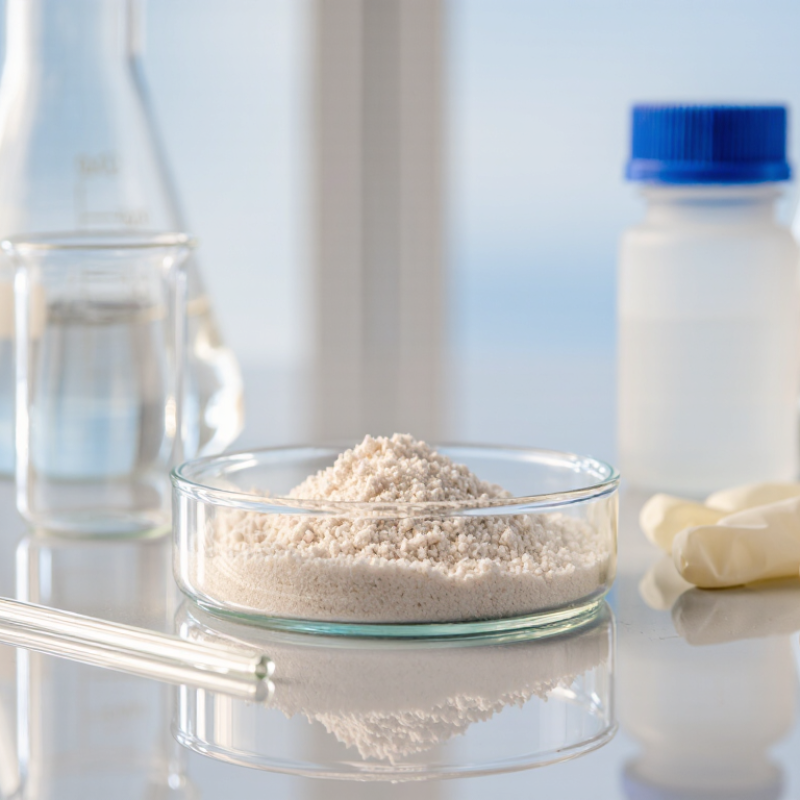
99% Pure Sodium Ascorbyl Phosphate Powder is a cosmetic ingredient and a water-soluble derivative of vitamin C. It usually appears as a fine, pale powder, supplied for use in skincare formulations rather than direct application. The “99%” figure describes a stated purity or assay level, but its meaning depends on the supplier’s test method and product specification. A certificate of analysis can clarify what was measured. Details matter.
Sodium ascorbyl phosphate is used in products such as serums, lotions, and creams. Formulators consider its solubility, recommended use level, pH range, and compatibility with other ingredients. These details should come from the supplier’s technical documents, not from a label claim alone. A powder can look clean and still require careful verification. That distinction is easy to miss.
This guide explains what the ingredient is, how purity claims are assessed, and what buyers should check before choosing a grade. Look for batch-specific documentation, storage guidance, and information about testing methods. “99% pure” does not mean a finished product is 99% active ingredient, nor does it guarantee a particular skin result. Formulation and use affect performance. Even a clear specification leaves questions worth asking.
Chemical Identity and Composition of Sodium Ascorbyl Phosphate
Sodium ascorbyl phosphate (SAP) is a phosphate derivative of L-ascorbic acid, supplied as a sodium salt. PubChem’s compound record gives its formula as C6H6Na3O9P and molecular weight as 322.05 g/mol. Those figures describe the defined compound, not every commercial powder. The 2013 Cosmetic Ingredient Review Expert Panel assessment examined sodium ascorbyl phosphate among related ascorbyl phosphate ingredients used in cosmetics. Chemical identity matters: SAP is not simply powdered vitamin C, and its properties should not be assumed to match those of ascorbic acid.
“99% pure” usually refers to an assay result, but the number needs context. Check whether the certificate reports the assay on an as-is or dry basis, and whether it also lists water content and relevant impurities. A pale, free-flowing powder may look consistent, yet appearance alone cannot confirm its composition. A high assay does not automatically describe solubility, storage stability, or performance in a finished formula.
Tips: Compare the lot-specific certificate of analysis with the stated test method. Look for the assay basis, moisture result, and batch number. Small details count. If the document leaves these unclear, ask the supplier before comparing grades.
What Is 99% Pure Sodium Ascorbyl Phosphate Powder? - Chemical Identity and Composition of Sodium Ascorbyl Phosphate
| Data dimension | Information | Notes |
| Chemical identity | Sodium ascorbyl phosphate (SAP) | A water-soluble phosphate derivative of L-ascorbic acid (vitamin C). |
| Common chemical form | Trisodium L-ascorbyl-2-phosphate | The trisodium salt is a commonly specified form; confirm the exact form on the product specification or certificate of analysis. |
| Molecular formula | C6H6Na3O9P | Formula for anhydrous trisodium L-ascorbyl-2-phosphate. |
| Molar mass | Approximately 322.05 g/mol | Applies to the anhydrous trisodium form; hydration or a different salt form changes the value. |
| What “99% pure” means | A stated assay or purity value of 99% for the specified material | It is not a universal property of SAP. The method, basis (such as dry basis), and acceptance limits should be checked in the relevant specification or certificate of analysis. |
| Remaining fraction at a 99% assay | Nominally up to 1% outside the measured assay result | This fraction may include moisture, inorganic salts, or other impurities; its composition cannot be inferred from the purity figure alone. |
| Typical physical description | White to off-white powder | Appearance can vary with grade, moisture, and storage; use the supplier’s specification for acceptance criteria. |
| Solubility | Water-soluble | Actual dissolution depends on concentration, temperature, pH, and the material’s grade. |
| Cosmetic ingredient name | Sodium Ascorbyl Phosphate | This is the INCI name commonly used on cosmetic ingredient lists. |
| Key structural feature | A phosphate group is attached to the ascorbate structure | This chemical modification distinguishes SAP from unmodified ascorbic acid. |
| Storage considerations | Keep tightly closed and protect from moisture and excessive heat | Follow the storage conditions and shelf life stated in the product documentation. |
What “99% Pure” Means in Powder Specifications
What does “99% pure”mean on a Sodium Ascorbyl Phosphate Powder specification? Usually, it describes the measured proportion of the target ingredient under a stated test method. It does not automatically mean every 100-gram scoop contains exactly 99 grams of usable material. The result may be reported on an as-is basis or calculated after moisture is removed.That small detail matters.
A specification sheet should identify the assay method and its reporting basis. Check the batch certificate of analysis, not just a product page. Look for results such as moisture, residual solvents, and relevant impurities, where these are reported. Purity also says little about particle size, how quickly the powder disperses, or how it performs in a finished formula. A fine white powder can look reassuring, but appearance is not an assay. Even a clean number leaves questions worth asking.
Tips: Compare the stated assay with the batch result, and confirm whether moisture is included. Ask for clarification if the method or basis is missing. Keep storage conditions consistent; damp air can affect powders over time. A “99%” claim is useful, but it is not the whole specification.
Physical and Chemical Properties
What Is 99% Pure Sodium Ascorbyl Phosphate Powder?
Physical and Chemical Properties
Sodium ascorbyl phosphate is a water-soluble, phosphate-based derivative of vitamin C. In powder form, it is typically white to off-white and fine-grained, with little noticeable odor. Its chemical formula is C6H6Na3O9P, and its molecular weight is about 322.05 g/mol. A 99% purity claim describes an assay result, not how the ingredient will perform in every formula. Check the test method and batch certificate.
The powder dissolves in water, but its behavior depends on concentration, pH, and other ingredients. Compared with pure ascorbic acid, it is generally more stable in water-based formulations. It is not indestructible: prolonged exposure to heat, moisture, light, or incompatible ingredients may affect quality. A clear-looking solution is no guarantee of chemical stability. That detail is easy to overlook.
Tips: Store the dry powder in a tightly closed container, away from humidity and direct sunlight. Use a calibrated scale, and follow the supplier’s handling and formulation data. Check the finished product’s pH and appearance over time; small changes can matter.
Common Uses in Skincare Formulations
What Is 99% Pure Sodium Ascorbyl Phosphate Powder?
Common Uses in Skincare Formulations
Sodium ascorbyl phosphate (SAP) is a water-soluble vitamin C derivative supplied as a fine powder. A 99% purity grade describes the raw ingredient, not the strength of a finished serum. In skincare, formulators use it for antioxidant support and to help improve the appearance of uneven tone. Results depend on the complete formula and consistent use. Small details matter.
SAP commonly appears in water-based serums, lightweight lotions, and gel creams. The powder needs to dissolve evenly; undissolved grains can feel rough and lead to inconsistent distribution. A clear batch is useful, but clarity alone does not prove stability. Follow supplier guidance for use levels, pH, and storage, then assess the finished product over time. Heat, light, or incompatible ingredients may affect performance.
Formulators may choose SAP for products aimed at dull-looking or blemish-prone skin. Avoid promising that it treats acne or removes spots; cosmetic results vary. Moisturizing ingredients can support a comfortable feel, while fragrance and other active ingredients need compatibility checks. I would not judge a formula from one fresh sample. Recheck its color, odor, texture, and packaging after storage. A little uncertainty belongs in careful product development.
Storage, Stability, and Handling Considerations
What Is 99% Pure Sodium Ascorbyl Phosphate Powder?
Storage, Stability, and Handling Considerations
Sodium ascorbyl phosphate is a water-soluble vitamin C derivative supplied as a fine powder. Its 99% purity describes an assay result, not a guarantee of stability after opening. Moisture, heat, and repeated exposure to air can affect powder quality. Keep it in a tightly closed, dry container, away from sunlight and warm equipment. Small details matter.
For a useful stability benchmark, ICH Q1A(R2) describes accelerated pharmaceutical testing at 40°C ± 2°C and 75% relative humidity ± 5% for six months. These are test conditions, not recommended storage conditions for this cosmetic ingredient. They also do not prove how a particular batch will behave. Follow the supplier’s specification and check assay or appearance data when available. A clumped or discolored powder deserves investigation, though appearance alone cannot confirm potency.
Tips: Use a clean, completely dry scoop, and close the lid promptly. Avoid storing powder beside a steamy sink. Record the opening date. It sounds fussy, but repeated handling can quietly introduce moisture. Use gloves and eye protection when weighing fine powder, and consult the product’s safety data sheet for handling guidance.
What Is 99% Pure Sodium Ascorbyl Phosphate Powder?
Storage and handling: Keep the powder tightly sealed in a cool, dry place, protected from light. Minimize exposure to humidity and air during handling. The chart shows qualitative precaution priorities, not measured degradation rates; follow the supplier’s specification for the exact product.
